Why Does My Roof Leak Only During Heavy Rain? Common Causes and What to Check Safely
Why Does My Roof Leak Only During Heavy Rain? Common Causes and What to Check Safely
If you are a homeowner in the Triangle region — including Morrisville, Cary, Raleigh, Durham, Apex, or nearby communities — and you notice water stains or active dripping only after heavy rain, you are not alone. This is a common scenario, especially on homes built during the 2000s building boom. The good news: a heavy-rain-only leak does not necessarily mean your entire roof is failing. In many cases, the source is a localized seal or flashing failure that can be repaired once properly identified.
This article explains the most frequent causes of these intermittent leaks, what you can safely observe from the ground, and when it is time to call a professional roofer in the Triangle.
Quick answer: Heavy-rain leaks are often caused by failed pipe boots, cracked flashing around chimneys or skylights, clogged valleys or gutters, or wind-driven rain lifting shingle edges. Most of these issues are repairable, but a professional inspection is needed to confirm the exact source.
Common causes of heavy rain leaks in Triangle roofs
During a heavy downpour, water is driven against vulnerable points with more force than a light rain. That is why certain problem areas only show up when the rain is coming down hard. Here are the most common leak sources on Triangle homes:
- Failed pipe boots (roof penetrations). These rubber seals around vent pipes dry out and crack over time. Under heavy rain, water can run down the pipe and into the attic.
- Flashing failures at roof-wall intersections. The metal flashing where a roof meets a vertical wall can separate or rust, allowing water to enter during wind-driven rain.
- Chimney and skylight flashing. Step flashing or counter-flashing around chimneys and skylights can deteriorate, leading to leaks that only appear during heavy rain.
- Clogged or damaged valleys. Valleys collect runoff from large roof areas. If they are blocked by leaves, pine needles, or debris, water can back up under the shingles.
- Gutters and downspouts full of debris. The Triangle has an abundance of trees, and pine needles are especially common in planned communities. Clogged gutters allow water to overflow behind the fascia and into the roof edge.
- Wind-driven rain under ridge caps or lifted shingles. High winds during thunderstorms can lift the edges of shingles or ridge caps, creating gaps that heavy rain exploits.
- Deteriorated underlayment. In older roofs, the felt or synthetic underlayment may have degraded, allowing water to penetrate even if the shingles themselves look intact.
What you can safely check from the ground
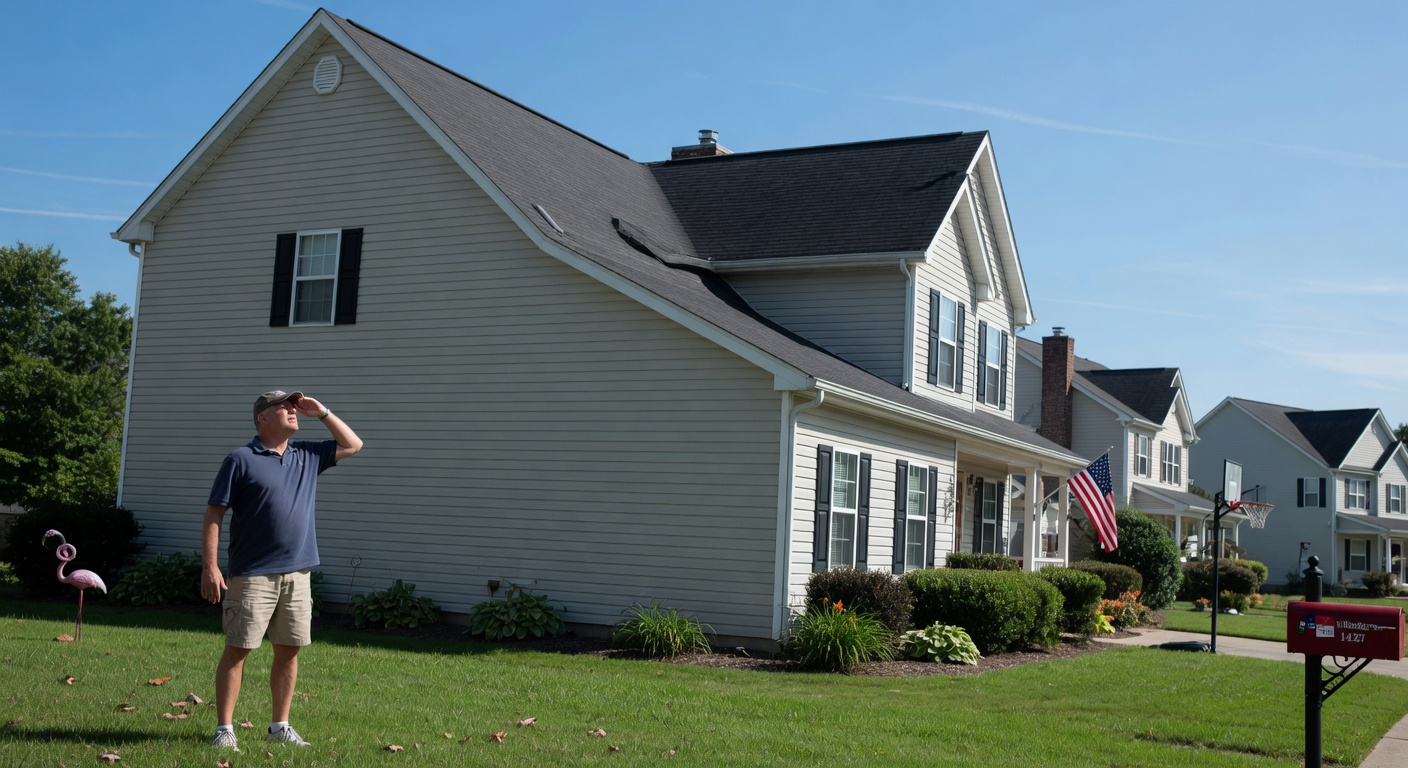
You should never climb onto a roof to diagnose a leak yourself. But there are several things you can observe from ground level or from inside the attic:
- Inspect the attic after a heavy rain. Use a flashlight to look for active dripping, water stains, or damp insulation. Trace the water trail upward to find the possible entry point.
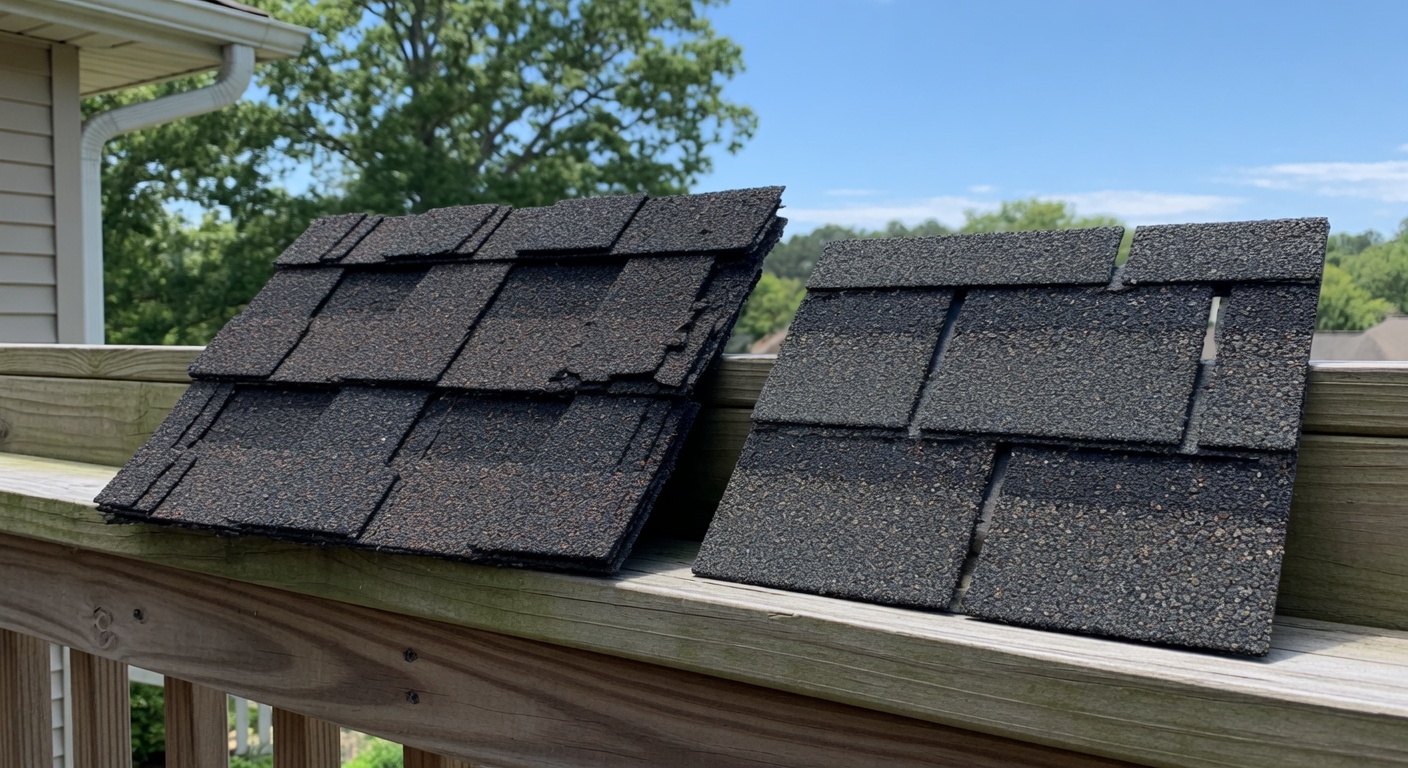
- Check for granule loss. Look at the ground around downspouts for piles of black or dark granules. This indicates shingle wear and may mean the shingles are nearing end of life.
- Examine gutters and downspouts. Are they clogged with leaves, pine needles, or debris? Water overflowing the gutter is a common cause of roof-edge leaks.
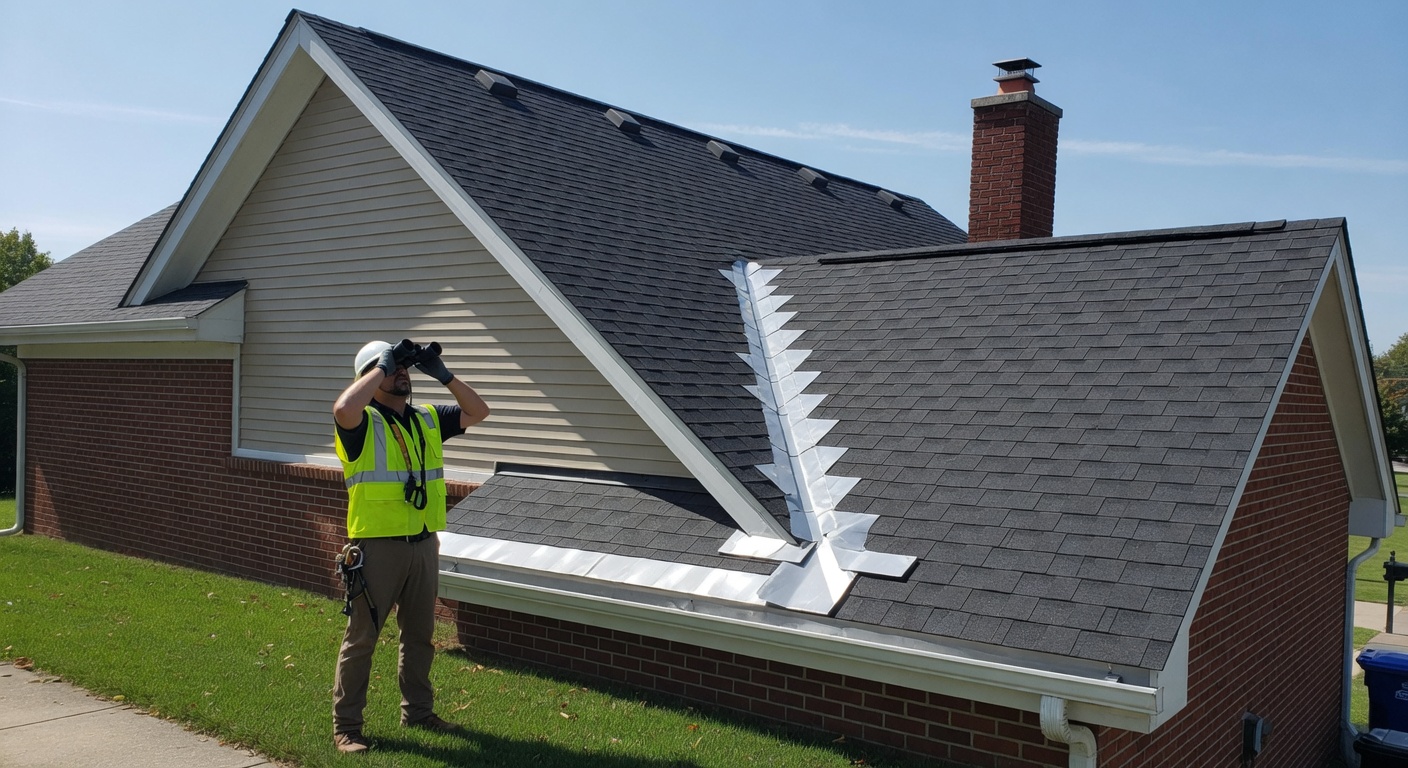
- Look for missing, curled, or lifted shingles. From the ground or with binoculars, check if any shingles are visibly damaged or out of place.
- Check soffit and fascia. Stains or rot on the underside of the eaves can indicate water backup from clogged gutters or ice dams (rare in our climate but possible).
- Inspect ridge caps. Missing or damaged ridge caps can allow wind-driven rain into the attic.
- Look for algae or moss. While common in our humid climate, heavy algae growth can trap moisture and accelerate shingle deterioration.
Important: If you see active leaks, mold, or sagging ceilings, do not enter the affected area. Call a professional immediately.
Triangle weather factors that contribute to leaks
The Triangle experiences frequent severe thunderstorms, especially in spring and summer. The National Weather Service issues warnings for storms with winds of 58 mph or higher and hail at least one inch in diameter. Heavy rain is common, and these storms can drop several inches of rain in a short period.
Additionally, the region is prone to tropical remnants that bring prolonged heavy rain. High humidity and heat also accelerate the aging of roofing materials, especially rubber pipe boots and sealants. Many Triangle homes built in or after the 2000s are now old enough that homeowners may be evaluating roof condition or planning inspections. If your home is in that age range, an inspection can help determine whether your roof is still in good shape or needs attention.
When to call for a professional inspection
A professional roof inspection is recommended if you experience any of the following:
- Active leaks or water stains appearing during or after heavy rain.
- Multiple leaks or a leak that persists after light rain.
- Your roof is more than 15 years old and has never been inspected.
- You recently had a severe thunderstorm, hail, or high winds.
- You see missing shingles, damaged flashing, or clogged gutters that you cannot safely address.
A qualified roofer, like Morrisville Roofing Company, can perform a thorough inspection using proper safety equipment and document the conditions with photos. They can identify the exact leak source and provide clear options — often a targeted repair is sufficient, but if the roof is nearing the end of its service life, they will explain the replacement timeline and considerations.
Next steps after identifying a potential issue
If you have noticed signs of a heavy-rain leak, here is what to do next:
- Document what you see. Take photos of stains, damaged shingles, or clogged gutters from the ground. Note when the leak occurs (during rain, after rain, etc.).
- Check the attic safely. If you have access and it is safe, inspect the attic with a flashlight. If there is active water, place a bucket to catch it.
- Contact a professional. Schedule an inspection with a trusted Triangle roofing contractor. They will assess the roof condition and provide a written report.
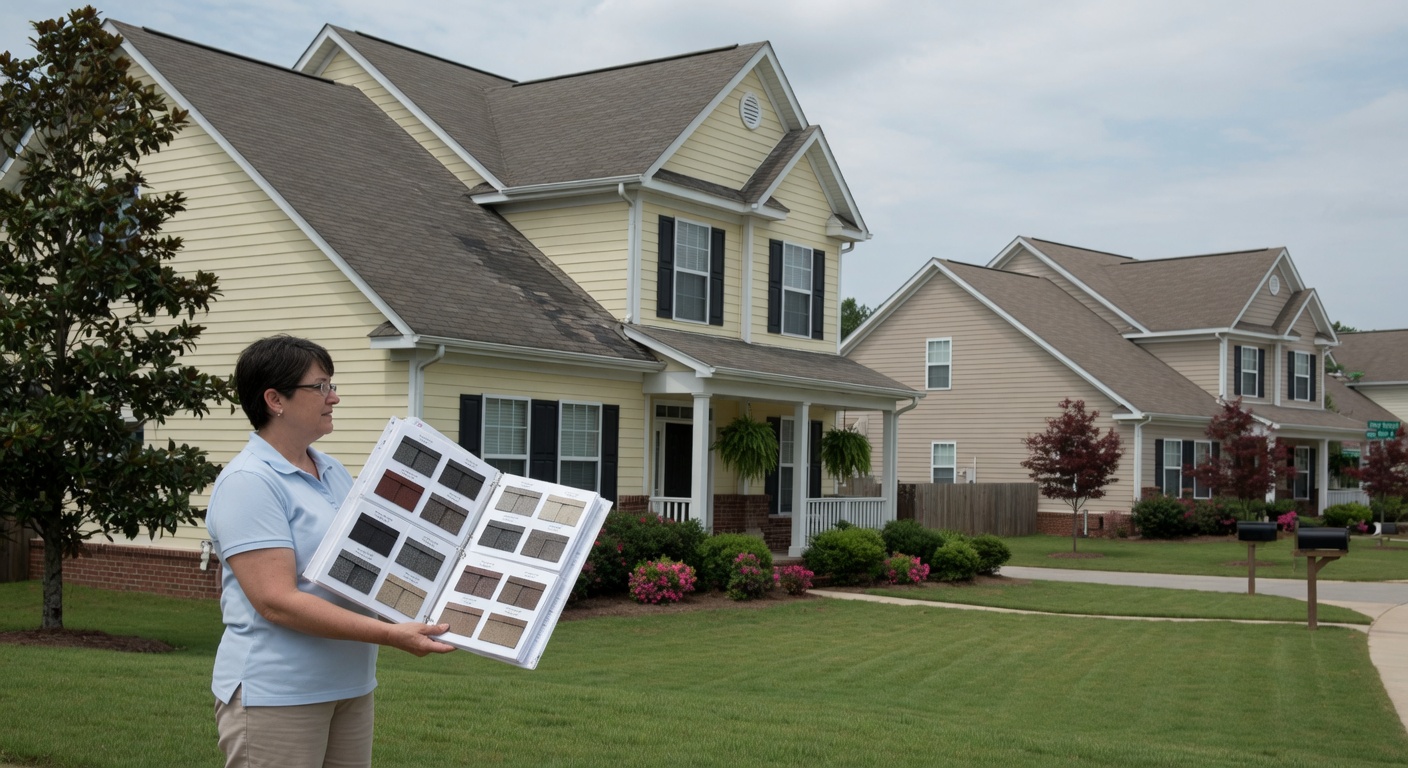
- Consider insurance. If the damage is storm-related, review your homeowners policy. The North Carolina Department of Insurance explains that insurers only owe for the damaged portion, even if shingles do not match. A professional inspection can provide the documentation you need.
If you are a homeowner in the Triangle and need help understanding a heavy-rain leak, contact Morrisville Roofing Company to request a roof inspection. We serve Morrisville, Cary, Raleigh, Durham, Apex, and surrounding communities. We will inspect your roof, document our findings, and explain your options clearly — without pressure.
More Posts by Morrisville Roofing Company