How wind, hail, and heavy rain damage Triangle roofs differently
After a thunderstorm rolls through the Triangle, many homeowners wonder: Did that wind, hail, or heavy rain actually damage my roof? Each weather event affects a roof in distinct ways, and understanding the differences can help you decide what to do next. This guide explains how wind, hail, and heavy rain each impact Triangle roofs, what signs to look for from the ground, and when a professional inspection is the right call.
Quick answer
Wind primarily lifts, creases, or removes shingles, especially at edges, ridges, and valleys. Hail creates dents, granule loss, cracks, or bruises on shingles and metal components. Heavy rain itself rarely causes primary shingle damage; instead, it reveals existing vulnerabilities in flashing, pipe boots, valleys, and other penetrations that leak under high water volume. All three can interact with roof age, ventilation, and prior wear to produce different outcomes.
Triangle weather patterns and roof vulnerability
The Triangle area, including Morrisville, Cary, Raleigh, and Durham, experiences frequent thunderstorms that meet or exceed severe criteria defined by the National Weather Service: wind gusts of 58 mph or higher, hail at least 1 inch in diameter, and heavy rain that can drop inches per hour. Many homes in the Triangle were built in the 2000s or later with asphalt shingle roofs that, while durable, accumulate wear over time. Understanding how each weather type affects these roofs helps you know what to look for after a storm.
Roof age is a critical factor. A roof installed during Morrisville and Triangle growth periods in the 2000s may now show cumulative wear from heat, humidity, and storms. That same roof might show wind damage after a 50 mph gust, while a newer roof might not. Hail impact can also vary: fresh asphalt shingles may resist bruising better than aged ones. Heavy rain leaks often appear on older roofs where sealants and flashing have dried out or shifted.
Wind damage: signs and contributing factors
Wind affects a roof by exerting uplift force on shingles. Once the adhesive seal is broken, shingles can lift, crease, or tear away entirely. The most vulnerable areas are along eaves, rakes (gable edges), ridges, and valleys—where wind can get underneath the edge and pull upward. Ridge caps and hip shingles are also susceptible because they are exposed from multiple sides.
Signs of wind damage you may spot from the ground
- Missing shingles or pieces of shingles
- Shingles that appear lifted or curled at the edges
- Creased or folded shingles (look like a crease across the middle)
- Exposed nail heads or fastener holes
- Damaged or missing ridge cap shingles
- Granules in gutters or downspouts that may have been knocked loose by flapping
Industry sources note that loosening may begin around 47 mph, but severe damage often occurs with the 58+ mph winds defined in severe thunderstorm criteria. A single strong gust may not cause visible damage, but repeated gusts or sustained high winds in a storm can gradually compromise shingle adhesion. If you see any of these signs from the ground, it is worth having a professional roof inspection to check for less visible problems like lifted fasteners or ripped underlayment.
Hail damage: what it affects and visible indicators
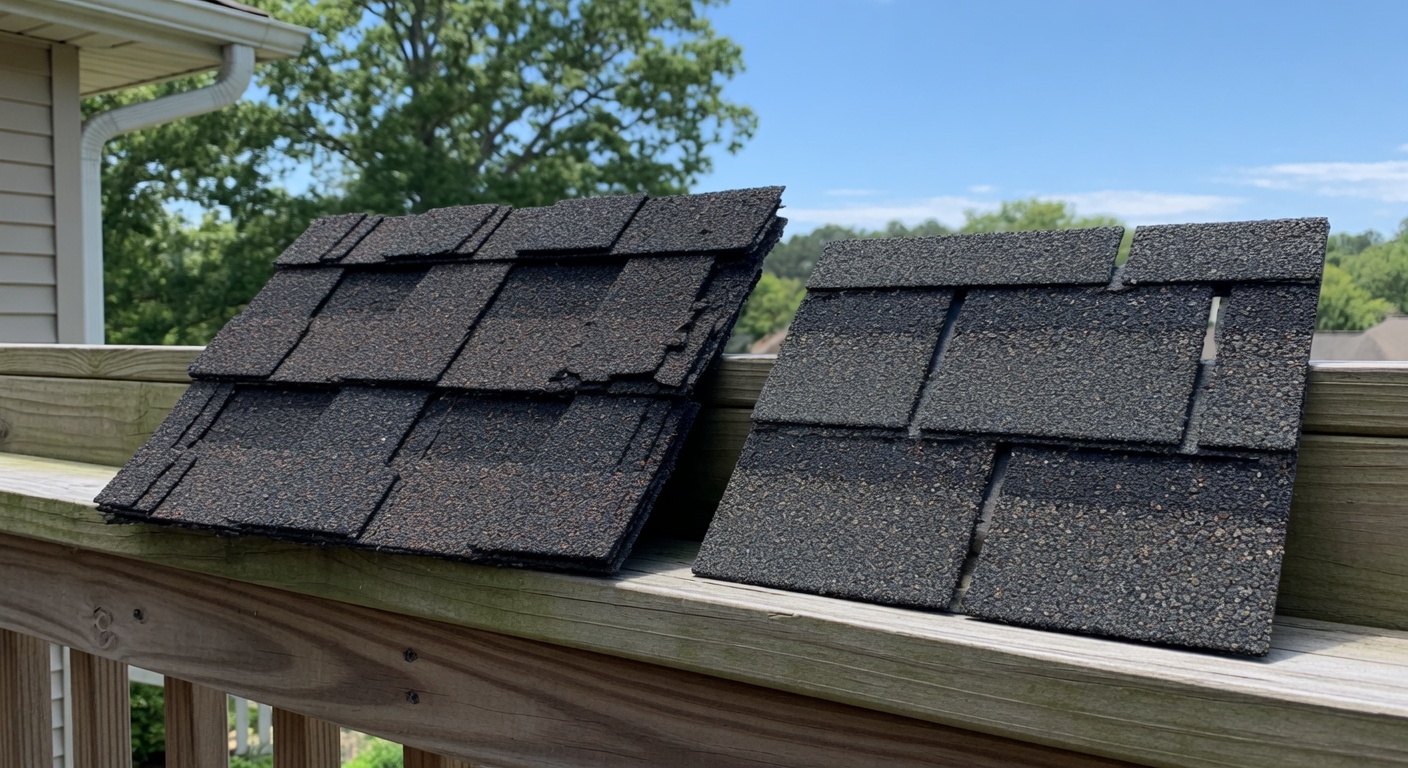
Hail impacts a roof by striking shingles and accessories (vents, gutters, ridge caps, skylights) with concentrated force. The damage depends on hail size, density, angle, and wind speed. For asphalt shingles, hail causes three main types of damage: dents or bruises (compression of the asphalt mat), granule loss (exposing the asphalt layer), and cracks or fractures in the shingle itself. Over time, these impact points can become entry points for moisture.
Signs of hail damage from ground level
- Circular dark or shiny spots on shingles (fresh impact marks)
- Clusters of granules in gutters or downspouts (granules knocked loose)
- Randomly scattered dents on metal accessories like vents, flashing, gutters
- Cracked shingles or exposed fiberglass mat
- Splits or tears along the edges of shingles
It's important to note that not all hail damage is immediately obvious from the ground. A roof inspector can confirm damage by feeling for soft spots (bruises) or using a moisture meter. The National Weather Service criteria for severe hail starts at 1 inch diameter—about the size of a quarter—but smaller hail can still cause damage on older or more brittle shingles. If you suspect hail hit your roof, schedule a storm damage inspection to get a thorough assessment.
Heavy rain and leak risks from multiple sources
Heavy rain itself seldom causes primary shingle damage. Instead, it reveals issues that already exist. When a sudden downpour hits the Triangle, the high volume of water tests every seam and penetration on a roof. Leaks that only appear during heavy rain are often caused by:
- Failed or improperly installed flashing around chimneys, skylights, vents, and roof-wall intersections
- Cracked or deteriorated pipe boots (rubber seals around plumbing vents)
- Clogged gutters or downspouts that cause water to back up under the edge of shingles
- Damaged or poorly sealed valleys (the V-shaped channels where roof slopes meet)
- Ice damming in winter (less common in Triangle but possible)
Rain-driven leaks can be deceptive: the water may enter at one point, run along a roof deck, and appear elsewhere in the home. If you notice water stains, wet spots, or active dripping during or after a heavy rain, it's worth checking from the attic (if accessible and safe) for signs of moisture. But the only way to pinpoint the source often requires a professional on the roof.
How roof age, ventilation, and prior damage interact with these events
No weather event acts on a roof in isolation. A roof that already has compromised fasteners, brittle shingles, or poor ventilation will respond differently to wind, hail, or heavy rain than a well-maintained newer roof. For example:
- An older roof with granule loss from UV exposure may show more hail bruising than a newer roof.
- Inadequate attic ventilation can trap heat and moisture, weakening shingles over time and making them more prone to ridge curl or edge lifting in wind.
- Prior storm damage that went unrepaired (e.g., a small hail dent that didn't leak) can become a leak when heavy rain pounds that weakened spot.
This interplay means that a single inspection after a storm can identify both new damage and underlying wear, which helps you plan whether a repair is enough or replacement makes more sense. Roof repair may address isolated damage, but if the roof is near the end of its lifespan, replacement could be the better investment.
Ground-level checks you can safely perform
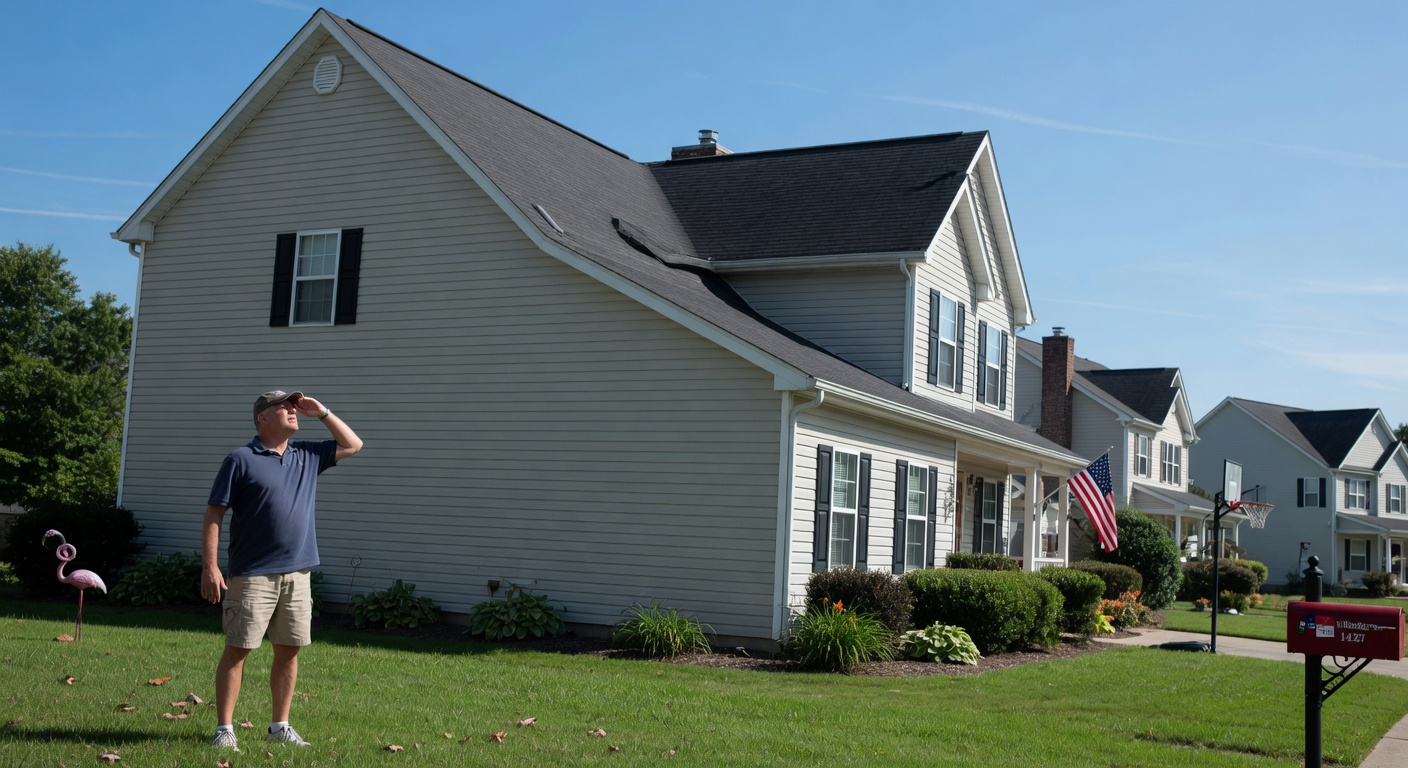
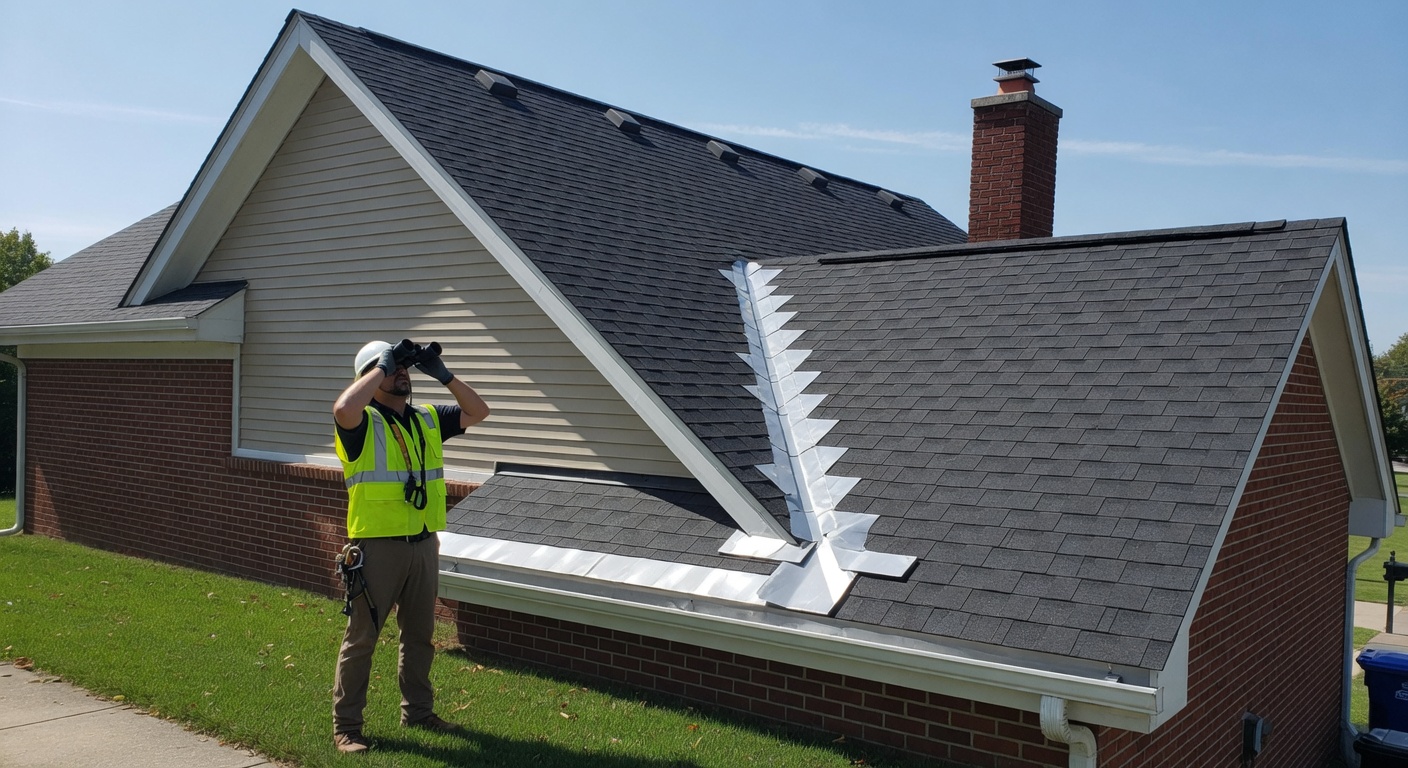
After any significant weather event, you can safely check from the ground for visible signs of roof damage. Stay on the ground, use binoculars, and never climb onto the roof or use a ladder beyond ground-level inspection. Look for:
- Granules in gutters or on the ground. A small amount after a storm may be normal, but piles of granules suggest significant impact or aging.
- Missing or misaligned shingles. Check the roof's edges, ridges, and around penetrations.
- Dents or damage to gutters, downspouts, vents, or outdoor AC units. These often indicate hail impact even if the roof looks fine.
- Interior signs. Check attic spaces (if accessible and safe) for water stains, daylight through roof boards, or damp insulation.
- Exterior walls and foundations. Water marks or peeling paint can indicate gutters are overwhelmed or downspouts are clogged.
If you see any concerning signs, or if you simply want peace of mind after a severe storm, it's time to call in an expert.
When a professional inspection provides the clearest next steps
Some damage is obvious from the ground, but much of it is not. Wind can lift shingles without detaching them, hail can cause hidden cracks that only become leaks months later, and heavy rain can enter through a small gap that only an inspector's trained eye can find. A professional roof inspection is the most reliable way to:
- Identify all active or latent damage from wind, hail, or heavy rain
- Distinguish new storm damage from pre-existing wear
- Document findings with photos and written notes
- Provide a clear recommendation on repair versus replacement
- Help you understand what your homeowners insurance policy may cover (keeping in mind that, per the North Carolina Department of Insurance, coverage is limited to direct physical damage and insurers only owe for the area that is actually damaged)
If you're uncertain whether a recent weather event affected your roof, the safest step is to schedule an inspection. Triangle homeowners can contact Morrisville Roofing Company to request a thorough inspection with clear, honest guidance on next steps. There's no pressure to replace unless it's truly the right call.
Understanding how wind, hail, and heavy rain each impact your roof helps you make informed decisions after every Triangle storm. Stay observant from the ground, know what to look for, and rely on a professional inspection when in doubt. Your roof is designed to protect your home through many seasons—with proper attention, it will continue to do so.
More Posts by Morrisville Roofing Company