Asphalt Shingle Selection for Triangle Homes: What to Consider
Asphalt Shingle Selection for Triangle Homes: What to Consider
Published: May 9, 2025
If you're a Triangle homeowner starting to think about roof replacement, you've probably noticed there's no shortage of shingle options. It can get confusing fast. But once you focus on how your roof actually copes with our local weather, the picture gets clearer. Here's a practical guide to the shingle characteristics that really count in this part of North Carolina.
Quick answer: For most Triangle homes, you'll want shingles with wind ratings sufficient for severe thunderstorms (think 110 mph or higher), algae-resistant granules to fight humidity-driven streaking, and impact ratings that can handle the occasional hailstorm. Thicker architectural shingles generally hold up better in hot summers than thinner 3-tab styles. But no single product is universally best — your home's specific roof pitch, ventilation, and exposure matter just as much as the shingle itself.
Factors that matter most when choosing shingles in the Triangle
Triangle weather isn't just one thing. It's hot, humid summers, severe thunderstorms with wind and hail, heavy rain from tropical remnants, and year-round UV exposure. That means your shingles need to handle a mix of stresses. Here are the key performance factors to consider:
- Wind rating – Shingles are tested for uplift resistance. Ratings of 110 mph or higher align with typical severe thunderstorm gusts in our area (National Weather Service criteria define severe storms with winds of 58+ mph).
- Impact rating – Class 3 or 4 impact resistance helps protect against hail damage. Hail of 1 inch or larger occurs in Triangle storms.
- Algae resistance – Algae-resistant shingles contain copper or zinc granules that slow the growth of the algae that causes black streaks. This is important in our humid climate.
- Thickness and granule retention – Thicker architectural (laminated) shingles are more durable and retain granules better than 3-tab options, especially in high heat.
No single rating guarantees perfect performance. A shingle is only as good as its installation, attic ventilation, and the condition of the underlying deck.
Wind and hail performance needs for Triangle storms
Summer thunderstorms in the Triangle can produce damaging wind gusts. According to the National Weather Service, severe storms are defined by winds of 58 mph or greater and hail of 1 inch or larger. Not every storm reaches those extremes, but it still makes sense to factor them in when choosing shingles.
Most modern architectural shingles carry wind ratings between 110 and 130 mph, which exceeds typical severe thunderstorm wind speeds. That said, wind damage depends heavily on installation quality, roof pitch, and how well the shingles seal. Impact-rated shingles (Class 3 or 4) offer some protection against hail, but larger hail can still damage even impact-resistant products. The only way to know if your roof took a hit is a proper inspection after a storm.
If you live in an area with frequent hailstorms or high winds – parts of Wake County and surrounding areas – it may be worth prioritizing these ratings. But keep in mind that many homeowners have older roofs that still perform fine after years of storms. The right choice often depends on your home's exposure and your comfort level with risk.
Heat, UV, and humidity resistance in the local climate
Triangle summers are hot and humid. Shingles exposed to intense UV radiation and high temperatures can degrade over time, losing granules and becoming brittle. Thicker architectural shingles generally perform better because they have more asphalt and filler to resist heat-related curling and cracking.
Proper attic ventilation is critical in this climate. Without adequate airflow, heat builds up under the roof deck, accelerating shingle aging. When you're choosing shingles, make sure your roofer evaluates ventilation as part of the replacement process. A roof that “cooks” itself can shorten even the best shingle's lifespan.
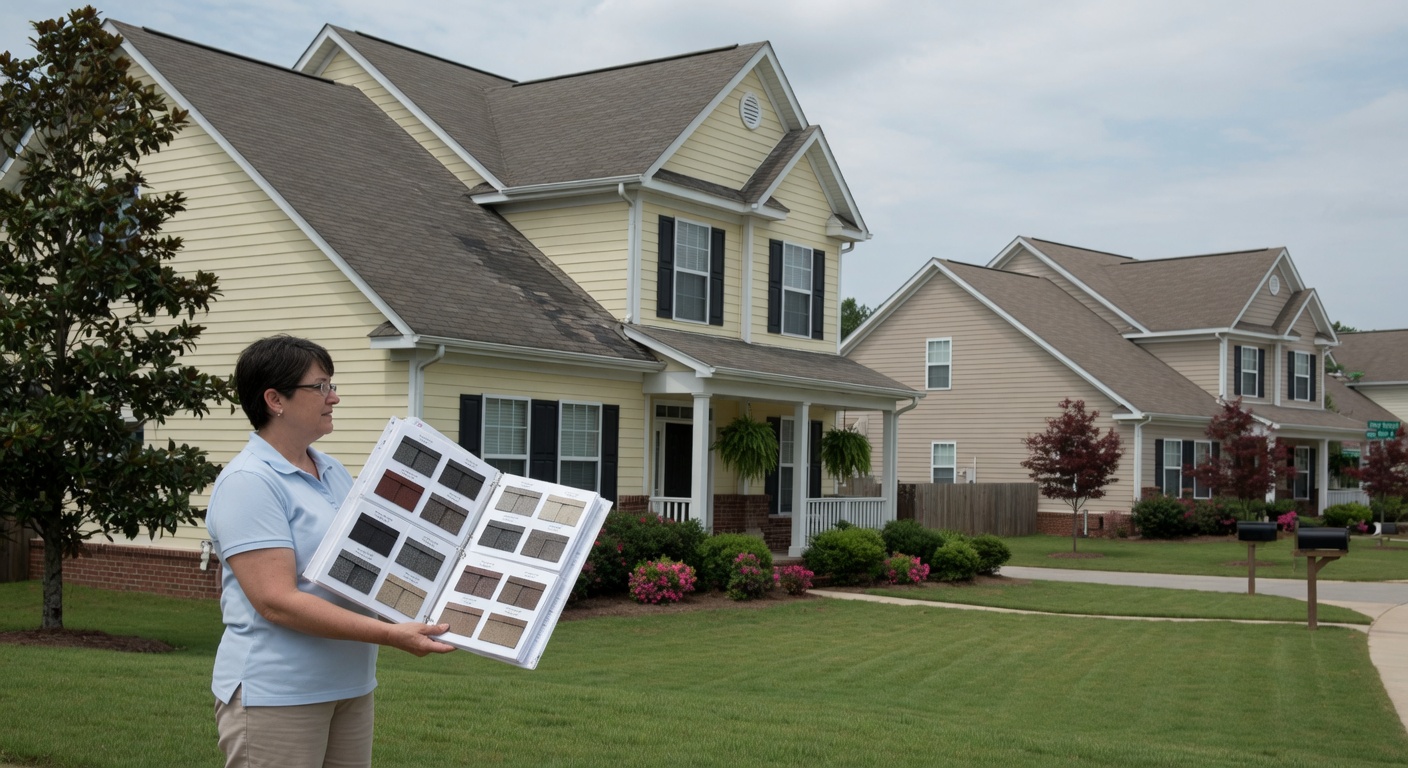
If you have a darker roof color, it can absorb more heat. That's not necessarily a problem if ventilation is good, but it's something to be aware of. Some homeowners prefer lighter colors for energy efficiency, but HOA or neighborhood restrictions may limit your options.
Algae and granule loss considerations for humid summers
Black streaks on asphalt shingles are caused by algae (Gloeocapsa magma), which thrives in warm, humid environments. While algae growth is primarily a cosmetic issue and not a sign of structural failure, it's a common concern for homeowners. Algae-resistant shingles include coated granules that reduce algae growth. They've become the norm in many parts of the Triangle because of our humidity.
If your current roof has streaking, that doesn't automatically mean it's time for replacement. But if you're planning a replacement anyway, algae-resistant shingles can help keep your roof looking cleaner for longer. They typically cost a little more but save on maintenance later.
Granule loss is a separate issue. As shingles age, they naturally lose granules. If you're seeing a lot of granules in your gutters or downspouts, it could be a sign that your shingles are nearing the end of their life. Thicker architectural shingles tend to retain granules better than 3-tab, making them a common choice in hot climates.
How shingle type interacts with attic ventilation and roof age
The type of shingle you choose doesn't exist in isolation. It works with your attic ventilation, roof deck condition, and overall home design. For homes built during the Triangle's growth in the early 2000s, many are approaching a first major roof decision. When that time comes, it's worth considering how the new shingles will interact with existing systems.
If your attic ventilation is inadequate, no shingle will reach its expected lifespan. Before a replacement, a professional inspection should assess ventilation, decking integrity, and insulation levels. That inspection is also the right time to discuss material options tailored to your home's specific condition.
For townhomes or homes in planned communities, HOA guidelines may restrict shingle color, style, or even impact or wind ratings. It's a good idea to check those requirements early in the process so you're not surprised later.
When material choice should be discussed during a professional inspection
We believe the best time to talk about shingle types is during a thorough inspection. An inspector can look at your roof's pitch, exposure, existing damage, and ventilation to give you realistic advice. They'll also help you weigh the trade-offs between cost, durability, and appearance.
At Morrisville Roofing Company, we serve homeowners across the Triangle – from Morrisville to Cary, Raleigh, Durham, Apex, and beyond. Our approach is simple: we inspect the roof, document what we find, and explain the options available. We don't push a specific product or brand. Instead, we help you understand the factors that matter for your particular situation.
If you're starting to think about roof replacement, or if you're just curious about what type of shingle your current roof has, we can help. Contact us to schedule a roof inspection and talk through your options.
More Posts by Morrisville Roofing Company