How HOA and neighborhood rules affect roof replacement in Wake County
How HOA and neighborhood rules affect roof replacement in Wake County
If you live in a Wake County planned community, HOA and neighborhood rules can significantly affect your roof replacement project. Many homeowners assume that as long as they meet building codes, they can proceed. But in neighborhoods governed by a homeowners association (HOA) or restrictive covenants, you may need approval before any work begins. The rules vary widely by community, so understanding your specific requirements is essential to avoid delays or disputes.
Quick answer: HOA and neighborhood rules for roof replacement in Wake County typically require prior approval through an architectural review process. These rules address materials, colors, and styles to maintain community appearance. Approval is separate from municipal building permits. Always check your community's governing documents (CC&Rs) before planning a roof project.
Typical HOA roofing rules in Wake County communities
Wake County has a high concentration of planned communities, especially in areas like Cary, Apex, Holly Springs, and Wake Forest. In these subdivisions, the HOA's authority over exterior modifications comes from the recorded declaration of covenants, conditions, and restrictions (CC&Rs). Under North Carolina's Planned Community Act (Chapter 47F), most HOAs formed after 1999 have the power to enforce architectural standards as outlined in their governing documents.
Common roofing restrictions include:
- Shingle type: Many HOAs require specific shingle styles, such as architectural (dimensional) shingles, and prohibit three-tab shingles.
- Color palettes: Approved colors are often listed in the architectural guidelines. Earth tones, grays, and browns are typical; bright or unusual colors may be restricted.
- Matching existing roofs: Some communities require new roofs to match the color and style of neighboring homes, especially for townhomes with shared walls.
- Material restrictions: Metal, slate, or wood shake roofs may be allowed only in certain areas or with additional review.
- Ventilation and accessories: Ridge vents, skylights, and pipe boots may need to be color-coordinated or placed out of sight.
How to locate and review your neighborhood guidelines
Before you call a roofer, take these steps to find your community's rules:
- Check your deed or closing documents. When you bought your home, you should have received a copy of the CC&Rs and any architectural guidelines.
- Contact your HOA or management company. They can provide the most current version of the rules and answer questions about the approval process.
- Search the Wake County Register of Deeds. Restrictive covenants are recorded with the county and are publicly searchable online. You can look up your subdivision's recorded documents.
- Read the architectural review guidelines. These are often separate from the CC&Rs and detail specific requirements for roofing, colors, materials, and submission procedures.
Common requirements for materials, colors, and styles
While every community is different, many Wake County HOAs share similar expectations for roof replacements:
- Shingle type: Architectural (dimensional) asphalt shingles are commonly required; some allow impact-resistant or algae-resistant options.
- Color: Approved from a pre-selected palette, often muted tones like charcoal, brown, or gray.
- Warranty: A minimum manufacturer warranty (e.g., 30-year or 50-year) may be required.
- Contractor qualifications: Some HOAs require contractor details and licensing information.
- Timeline: Exterior work may need to be completed within a set period (e.g., 30 days) after approval.
Keep in mind that these are general patterns. Your community may have stricter or more lenient rules. Always read your own documents carefully.
The approval submission process and timeline
Most HOAs require you to submit an application to the Architectural Review Committee (ARC) before starting any roof work. The application typically includes:
- Product specification sheets for the proposed shingles.
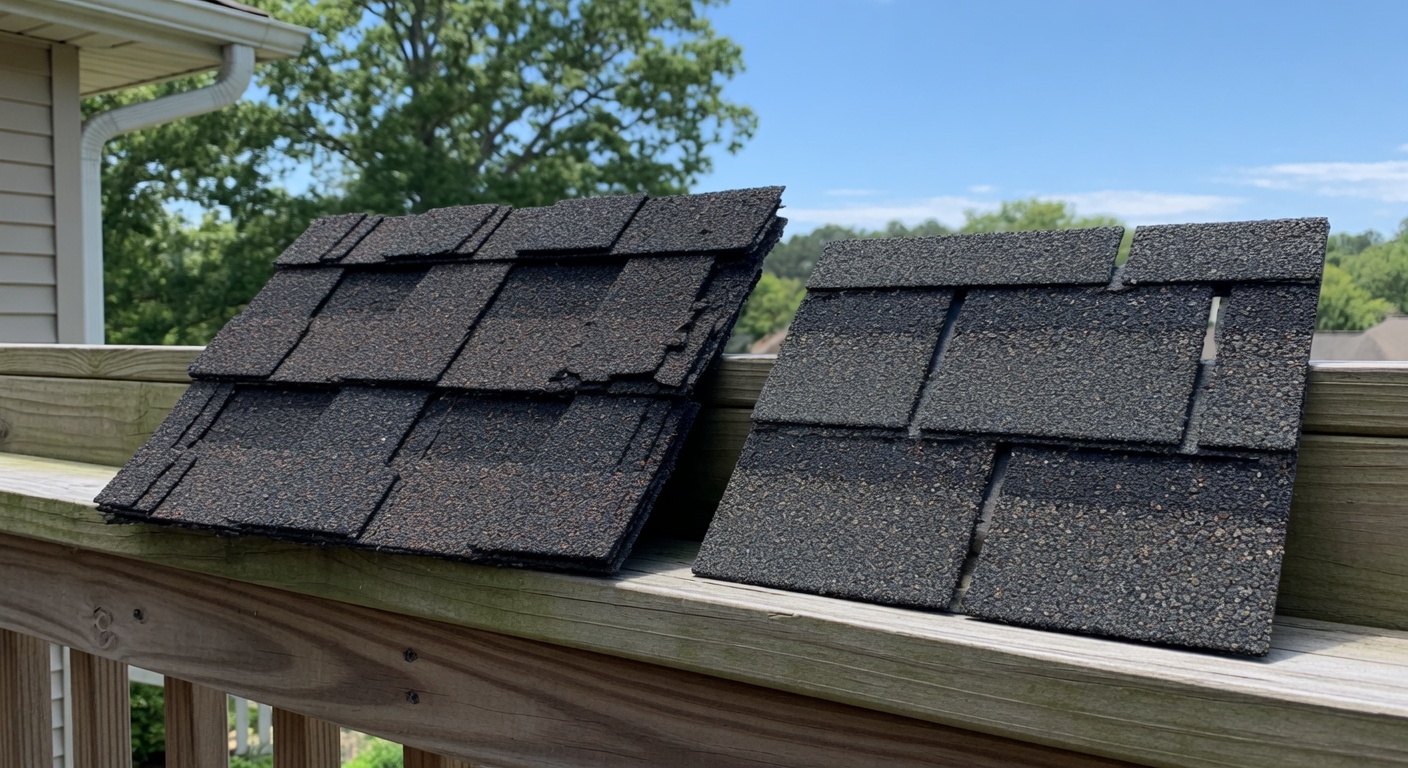
- Color samples or manufacturer color cards.
- Contractor name and details.
- Project start and end dates.
Many CC&Rs specify review periods of 30 to 45 days, though this can vary by community. The ARC will either approve, approve with conditions, or deny the request. If denied, you can often appeal to the board or propose an alternative. Starting work without approval can lead to fines or a requirement to remove the new roof at your expense.
Important: HOA approval is separate from obtaining a building permit from your city or Wake County. You may need both, but the HOA process typically comes first because it determines whether the project meets community standards.
How rules interact with Triangle climate and storm considerations
Wake County sees its share of thunderstorms, wind, hail, and tropical remnants. These weather events can damage roofs and trigger the need for replacement. When storm damage occurs, homeowners often face a tension between making an insurance claim and complying with HOA rules.
If your roof is damaged by a storm, your HOA may have provisions that allow for emergency repairs, but any permanent replacement will still need architectural review. It's wise to contact your HOA as soon as possible after damage to clarify what is required. Some communities may have pre-approved material lists that can speed up the process, especially if many homes in the neighborhood are replacing roofs after the same storm.
Also note that insurance policies typically cover only the damaged portion, but if matching shingles aren't available or if the repair triggers a need for full replacement, your HOA may still require a uniform look. You may need to work with your adjuster and roofer to document why the full replacement is necessary.
When to involve a professional roofing contractor early
Bringing a roofer into the process early can help you navigate HOA requirements. A contractor who understands the local landscape can provide the product specifications, color samples, and warranty documents that the ARC needs. They can also advise on which materials are likely to be approved based on community patterns.
At Morrisville Roofing Company, we can help you understand the documentation typically needed for HOA approval. We don't guarantee approval or handle HOA submissions directly, but we can provide detailed product information and scope descriptions that may support your application. Contact us for a roof inspection to discuss your roof replacement and we can help you understand what information you'll need for your HOA.
For a deeper look at the roof replacement process, visit our roof replacement page. If you need a current roof inspection, we can help with that too.
More Posts by Morrisville Roofing Company