Roof repair versus replacement: A guide for Triangle homeowners
Roof repair versus replacement: A guide for Triangle homeowners
If you’ve noticed a leak during heavy rain, found a few missing shingles after a storm, or your roof is approaching 20 years old, you’re likely wondering: Should I repair or replace the whole thing? It’s one of the most common questions Triangle homeowners face, and the answer depends on several factors. This guide walks through the key considerations so you can make an informed decision.
Here’s the quick answer: Repair is often the right choice when damage is localized and the rest of the roof is in good condition with years of life left. Replacement becomes the better option when problems are widespread, the roof is near or past its expected lifespan, or there are recurring issues that indicate systemic failure. But the details matter, and a thorough inspection is the only way to know for sure.
Understanding the repair versus replacement decision
Triangle homeowners live in a region with frequent thunderstorms, wind events, hail, and heavy rain. The housing stock includes many homes built during the 2000s, which are now entering an age where roofs often need their first serious evaluation. Factor in humid summers that can accelerate granule loss and algae growth, and it’s no surprise that roof decisions feel complex.
But complexity doesn’t have to mean confusion. By breaking down the key factors, you can better understand what your roof might need and when to call in a professional for a professional roof inspection.
Key factors that influence the choice
Every roof is different, but the following factors are the most important in deciding between repair and replacement. Some you can assess from the ground; others require a trained eye.
Damage location and extent
The single most important factor is whether the damage is localized or widespread.
- Localized damage often can be repaired. Examples include a single leak at a pipe boot or flashing, a few shingles blown off during a storm, or a small area of granule loss near a valley. If the surrounding shingles are sound and the roof is relatively young, targeted repair usually makes sense.
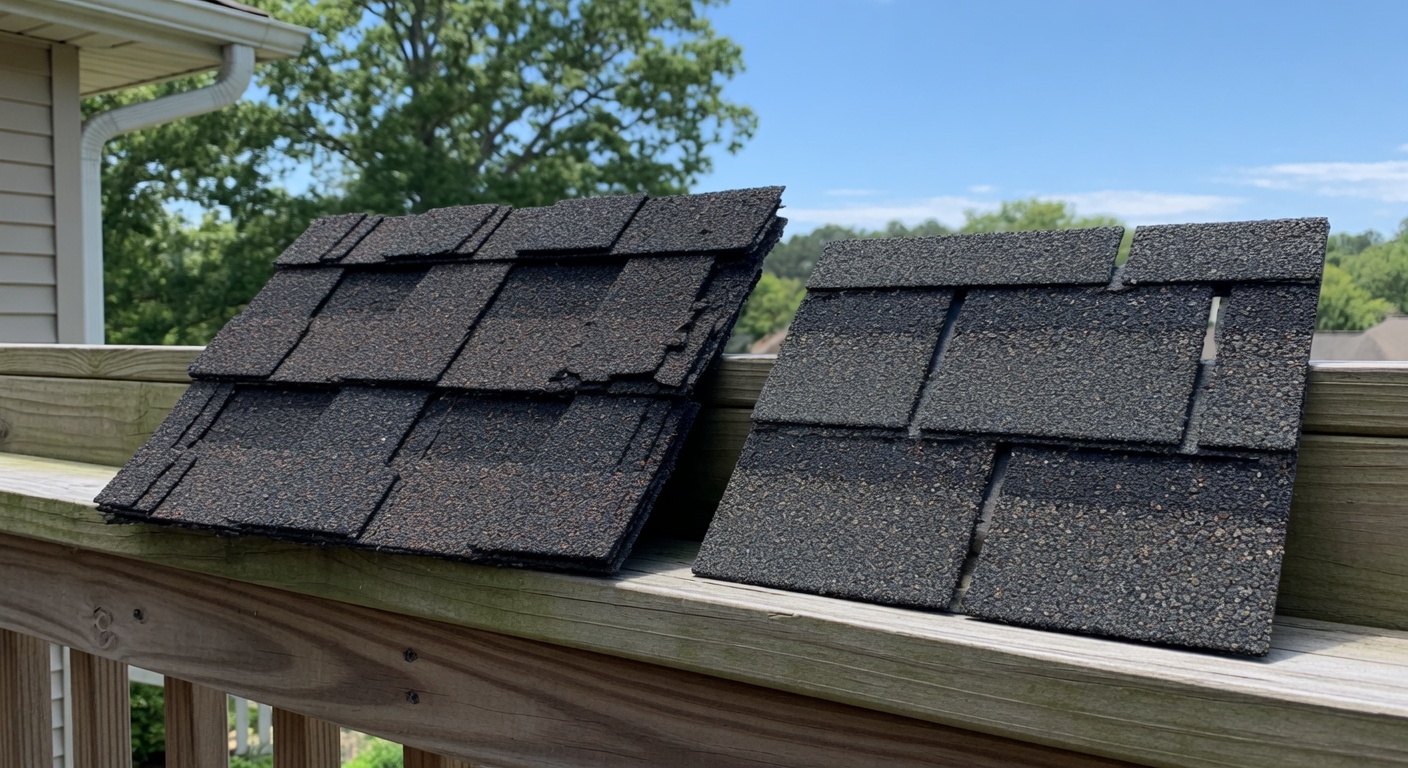
- Widespread damage suggests that the roof’s protective system has failed in multiple places. You might see missing or curling shingles across several slopes, widespread granule loss in gutters, or multiple leaks. In such cases, replacement is often more cost-effective than a series of repairs.
Roof age and overall condition
Asphalt shingle roofs in North Carolina typically last between 15 and 30 years, depending on shingle quality, installation, ventilation, and maintenance. Architectural shingles generally last longer than three-tab.
- If your roof is under 15 years old and damage is limited, repair is usually the sensible path.
- If the roof is over 20 years old and you’re experiencing issues, replacement may be more practical. Even if the visible damage seems small, the roof’s overall condition may be compromised.
- If you don’t know the roof’s age (common for recent home purchases), an inspection can help determine remaining life by checking shingle condition, granule retention, and signs of aging.
For more on typical lifespans, see our article on asphalt shingle roof lifespan in the Triangle.
Impact of recent storms or leaks
Triangle weather can test any roof. Severe thunderstorms bring winds over 58 mph and hail 1 inch or larger, according to the National Weather Service. These events can cause:
- Wind damage: Lifted or missing shingles, exposed nail heads, or damage to ridge caps. If only a few areas are affected, repair is likely enough. But if the wind was strong enough to lift shingles across many planes, there may be hidden damage to the roof deck or underlayment.
- Hail damage: Hail can bruise shingles, causing granule loss that may not be visible from the ground. Over time, the damaged area may leak. An inspection can reveal the extent. Localized hail damage on a younger roof may be repairable; widespread damage often necessitates replacement.
- Heavy rain leaks: A leak during a downpour doesn’t automatically mean you need a new roof. Leaks often originate at specific points like flashings around chimneys, vents, or skylights, or at valleys where water flows heavily. These can often be repaired if the surrounding roof is sound. But if the leak is from multiple locations or the decking is saturated, replacement may be needed.
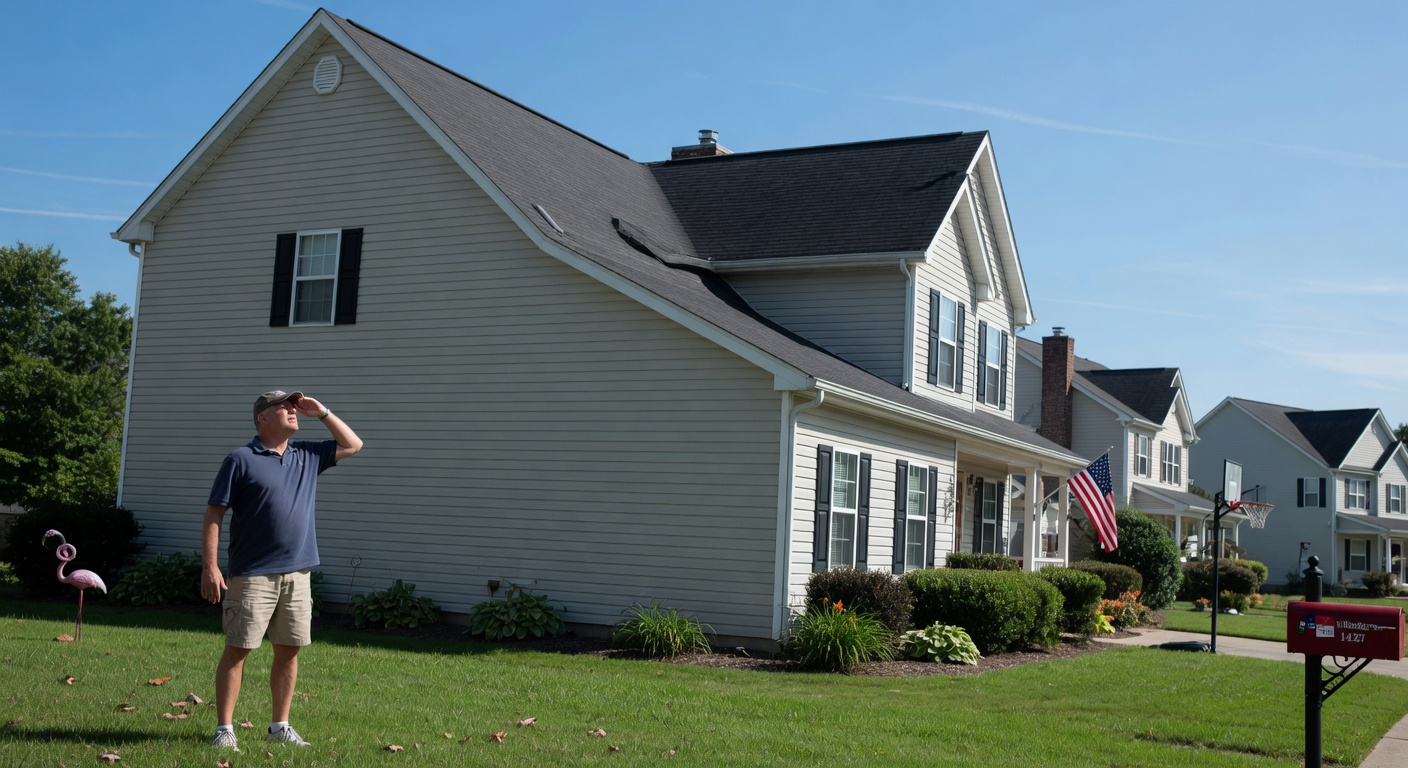
After any significant storm, it’s wise to inspect from the ground looking for visible damage and to consider a storm damage roof inspection if you suspect issues.
Attic ventilation and hidden issues
Poor attic ventilation can shorten a roof’s life significantly. In the Triangle’s humid climate, inadequate airflow raises temperatures and moisture levels, leading to shingle curling, premature granule loss, and even deck rot. During an inspection, a professional will check ventilation as part of the overall roof system assessment.
If your roof has good ventilation and the shingles are in decent shape, repair may be feasible. If ventilation is poor and has caused widespread shingle deterioration, replacement with improved ventilation is the better long-term solution.
Neighborhood and HOA considerations
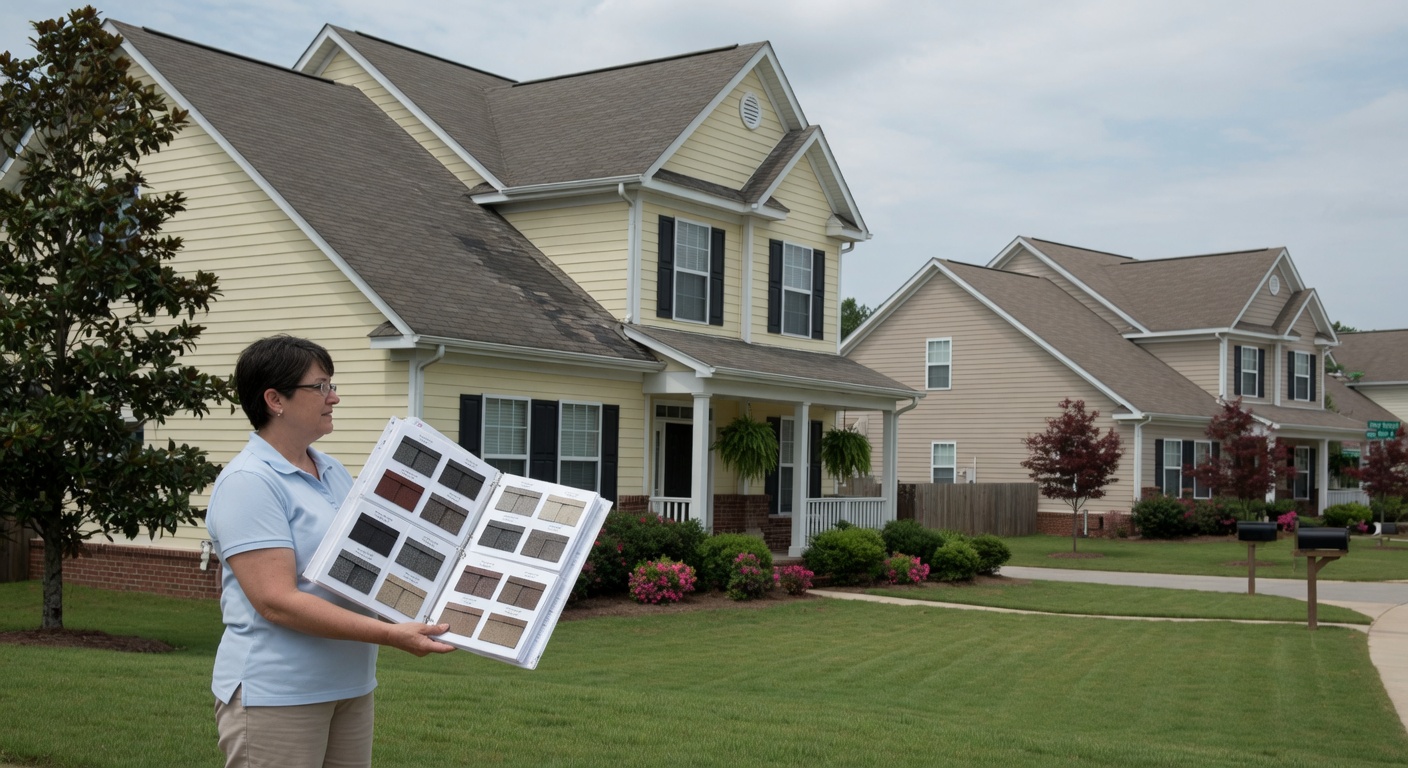
Many Triangle communities, especially planned developments and townhome neighborhoods, have homeowners’ associations or architectural guidelines that affect roof materials and colors. If you’re considering replacement, check your HOA’s rules early. If you’re doing a repair, make sure you can match the existing shingle color and style to avoid a mismatch that might attract attention. Rules vary widely, so always verify.
When to call for a professional inspection
While you can safely look for signs like missing shingles, granule loss in gutters, or interior water stains, some problems are not visible from the ground. A professional roof inspection is recommended when:
- You notice a leak or water stain, even if it’s small.
- You suspect storm damage but can’t see it clearly from the ground.
- Your roof is over 15 years old, especially if you don’t know its condition.
- You’re preparing to sell or buy a home and want a clear picture of the roof’s condition.
- You’ve had multiple repairs in recent years and wonder whether replacement makes more sense.
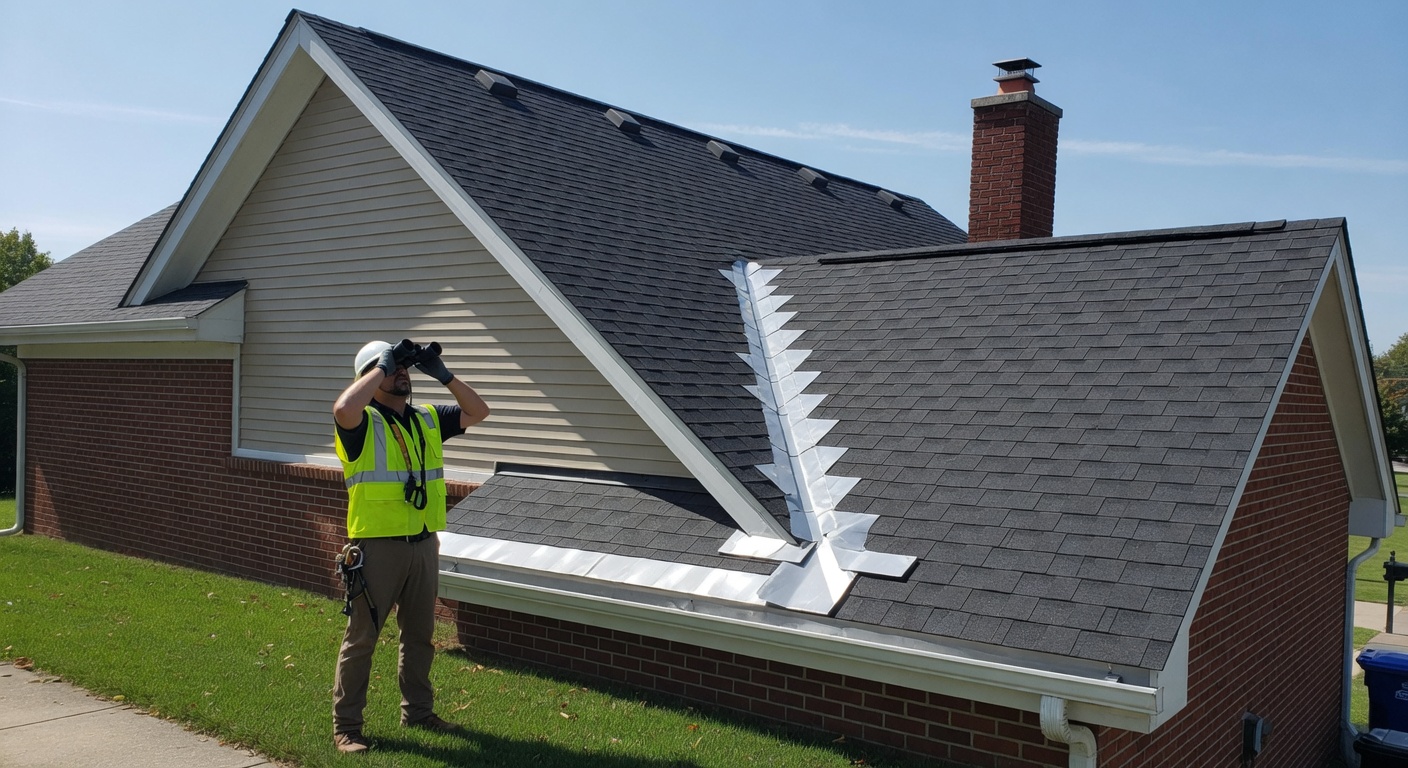
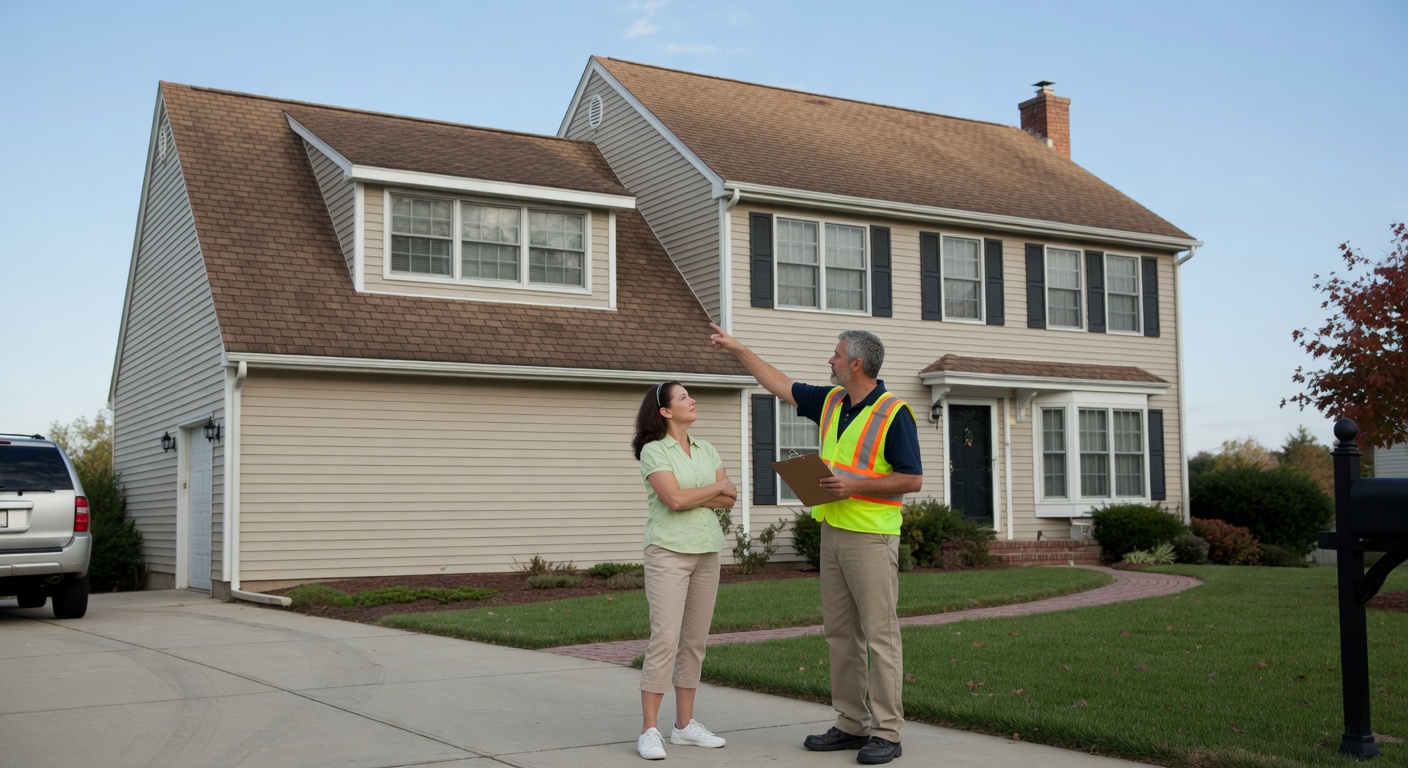
A thorough inspection will assess shingle condition, flashings, valleys, vent boots, attic ventilation, and decking integrity. The inspector should explain what they found, what it means for the roof’s remaining life, and whether repair or replacement is the more realistic option based on evidence, not pressure.
If you’re unsure about your roof’s next step, contact Morrisville Roofing Company to schedule an inspection. We serve homeowners across the Triangle, including Morrisville, Cary, Raleigh, Durham, Apex, and nearby communities. Our goal is to give you clear, practical advice so you can make confident decisions for your home.
More Posts by Morrisville Roofing Company