How the Triangle's Hot, Humid Climate Affects Asphalt Shingle Roof Lifespan
How the Triangle's Hot, Humid Climate Affects Asphalt Shingle Roof Lifespan
If you own a home in the Triangle, you've probably noticed that summers are hot and sticky. That humidity and heat don't just affect your comfort – they affect your roof too. Many homeowners wonder why their asphalt shingles seem to wear out faster than expected, especially on homes built in the 2000s. The short answer: the Triangle's humid subtropical climate accelerates several common aging processes, but understanding them helps you make informed decisions about inspections, maintenance, and eventual replacement.
Quick answer: how does the Triangle climate affect asphalt shingles?
Heat and UV radiation dry out the asphalt, causing brittleness and granule loss. High humidity supports algae growth which, while mostly cosmetic, can trap moisture. Frequent thunderstorms bring wind, hail, and heavy rain that test flashing, valleys, and aging shingles. Poor attic ventilation in these conditions makes everything worse. Together, these factors can shorten effective shingle lifespans compared to drier or milder climates – typically 15 to 30 years for asphalt shingles depending on type, installation quality, and maintenance.
The Triangle climate and asphalt shingle roofs
Morrisville and the surrounding Triangle area (Cary, Raleigh, Durham, Apex, and beyond) sit in a humid subtropical zone. Summers regularly see highs of 88-90°F, relative humidity often above 60%, and frequent thunderstorms. This combination creates a demanding environment for any roofing material, especially asphalt shingles which are petroleum-based and sensitive to heat and moisture.
Asphalt shingles are designed to withstand normal weather, but extreme or repeated stress accelerates breakdown. In the Triangle, three climate factors stand out: heat and UV, humidity, and storms.
How heat and UV accelerate aging
Thermal degradation and granule loss
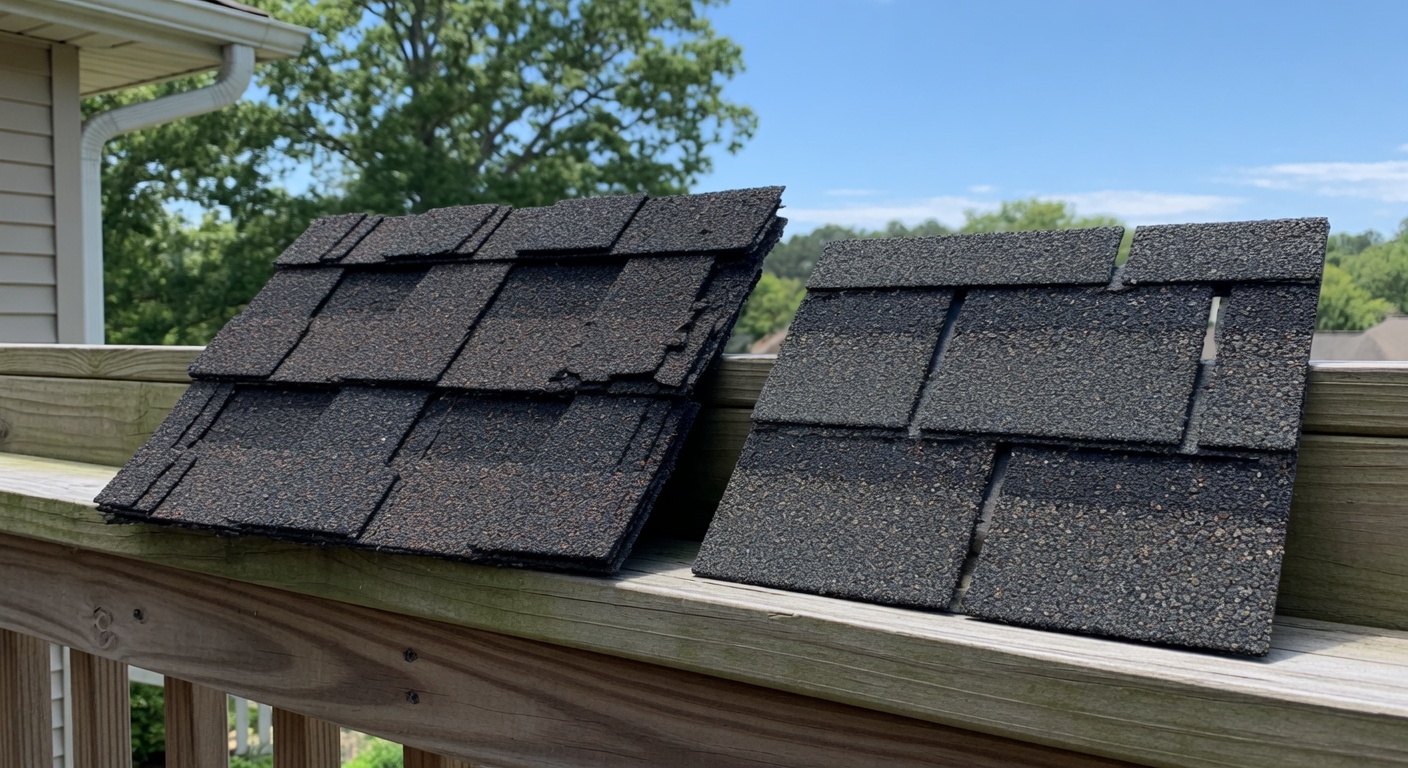
Heat softens the asphalt and causes it to oxidize over time. Oxidation makes the shingle stiffer and less flexible. As the shingle becomes brittle, it loses granules – the small mineral particles that protect against UV and provide color. Granules in your gutters are a telltale sign of aging.
UV radiation from the sun breaks down the asphalt's chemical bonds, accelerating the same process. In the Triangle, long summer days and strong sun mean more UV exposure than in cloudier or more northern regions.
Thermal cycling
Temperature swings between hot days and cooler nights cause asphalt shingles to expand and contract. Over time, this thermal cycling can crack shingles, loosen seals around fasteners, and open gaps at flashing. In spring and fall, the Triangle's wide day-night temperature range adds stress.
Humidity, algae, and moisture effects
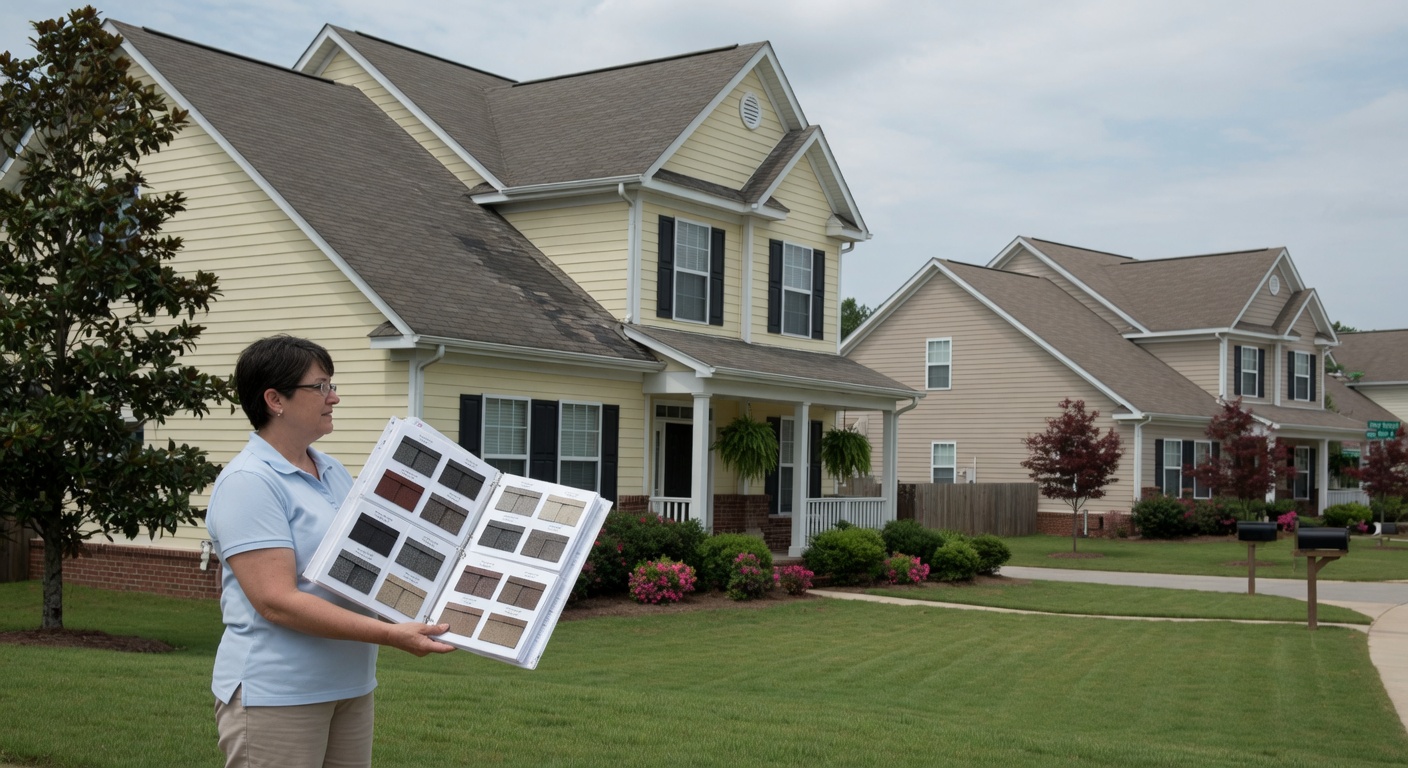
High humidity doesn't directly cause leaks, but it does create conditions for algae growth. The black or green streaks you see on many Triangle roofs are usually Gloeocapsa magma , a blue-green algae that feeds on the limestone filler in shingles. While algae is primarily an appearance concern, it can hold moisture against the shingle surface, potentially accelerating granule loss if left unchecked. In severe cases, trapped moisture can promote moss or lichen growth, which can lift shingle edges and create leak paths.
Humidity also matters for attic moisture. Warm, humid air entering the attic through vents or gaps can condense on the underside of the roof deck, especially during cooler nights. That moisture can rot wood sheathing, corrode fasteners, and reduce the effectiveness of insulation – all of which can shorten roof life.
Thunderstorms, wind, and heavy rain impacts
The Triangle's strong thunderstorms bring wind gusts over 50 mph, hail up to an inch or more, and torrential rain. Over time, these events cause cumulative damage:
- Wind lifts shingles, loosens adhesive seals, and can blow off shingles that are already brittle.
- Hail dents or cracks shingles, loosens granules, and damages vents, ridge caps, and flashing.
- Heavy rain reveals weaknesses in flashing, valleys, skylights, and chimney areas. Even a sound roof can leak if water backs up behind a damaged component.
If you suspect storm damage, a professional storm damage inspection can identify issues you can't see from the ground.
The role of ventilation in hot humid conditions
Attic ventilation is especially important in a humid summer climate. Without proper intake and exhaust vents, hot air and moisture get trapped, which can significantly raise roof deck temperatures and accelerate shingle aging from beneath.
Good ventilation moves cooler, drier air through the attic, reducing both peak temperatures and moisture buildup. This is one of the few controllable factors that homeowners can address to extend roof life. For more detail, see our article on how attic ventilation affects roof lifespan.
Safe ground-level checks for climate related wear
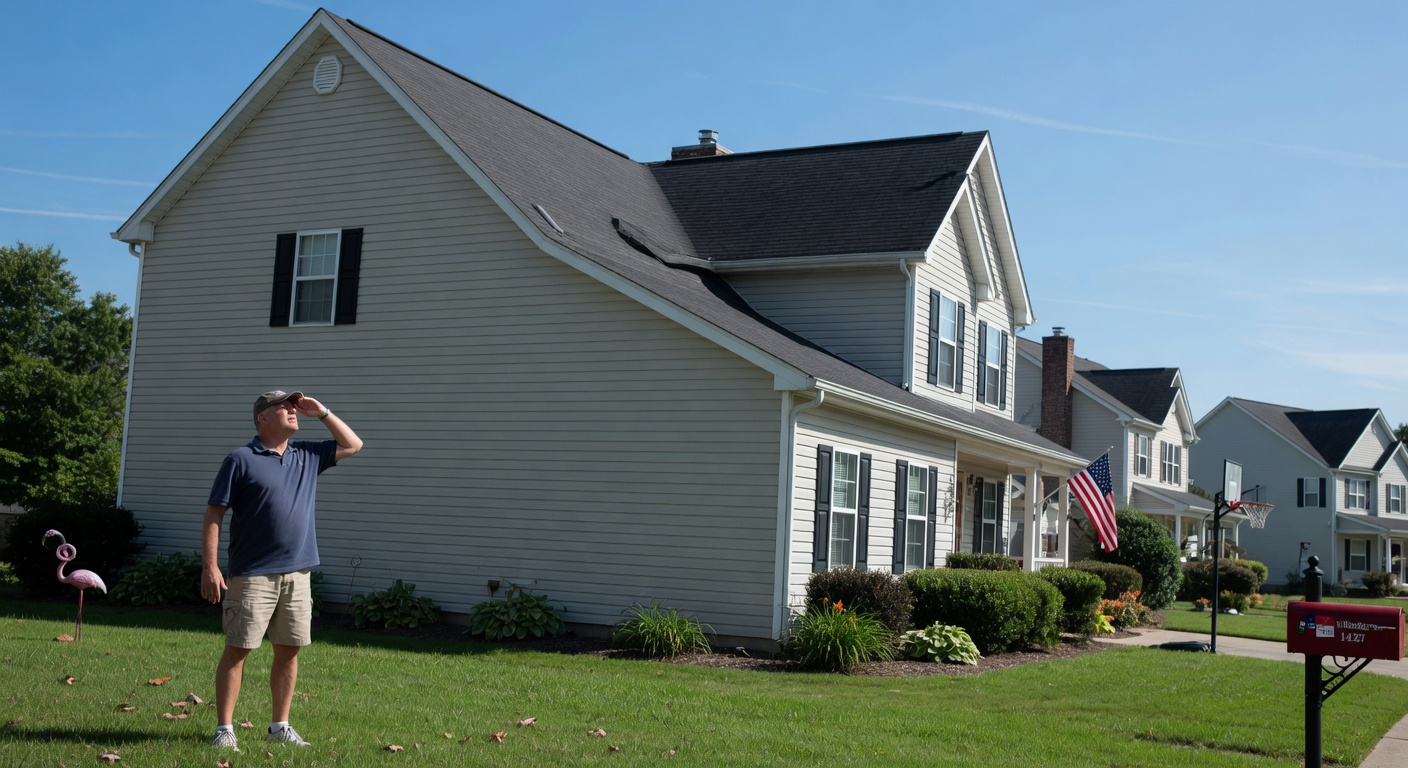
You don't need to climb onto your roof to spot signs of climate stress. From the ground, you can look for:
- Granules in gutters: A few granules after heavy rain is normal; consistent collections indicate active loss.
- Curling or cupping shingles: Shingle edges that curl upward or cup inward suggest thermal aging and brittleness.
- Black or green streaks: Algae staining is mostly cosmetic but worth monitoring.
- Cracked or missing shingles: Usually a sign of impact or advanced aging.
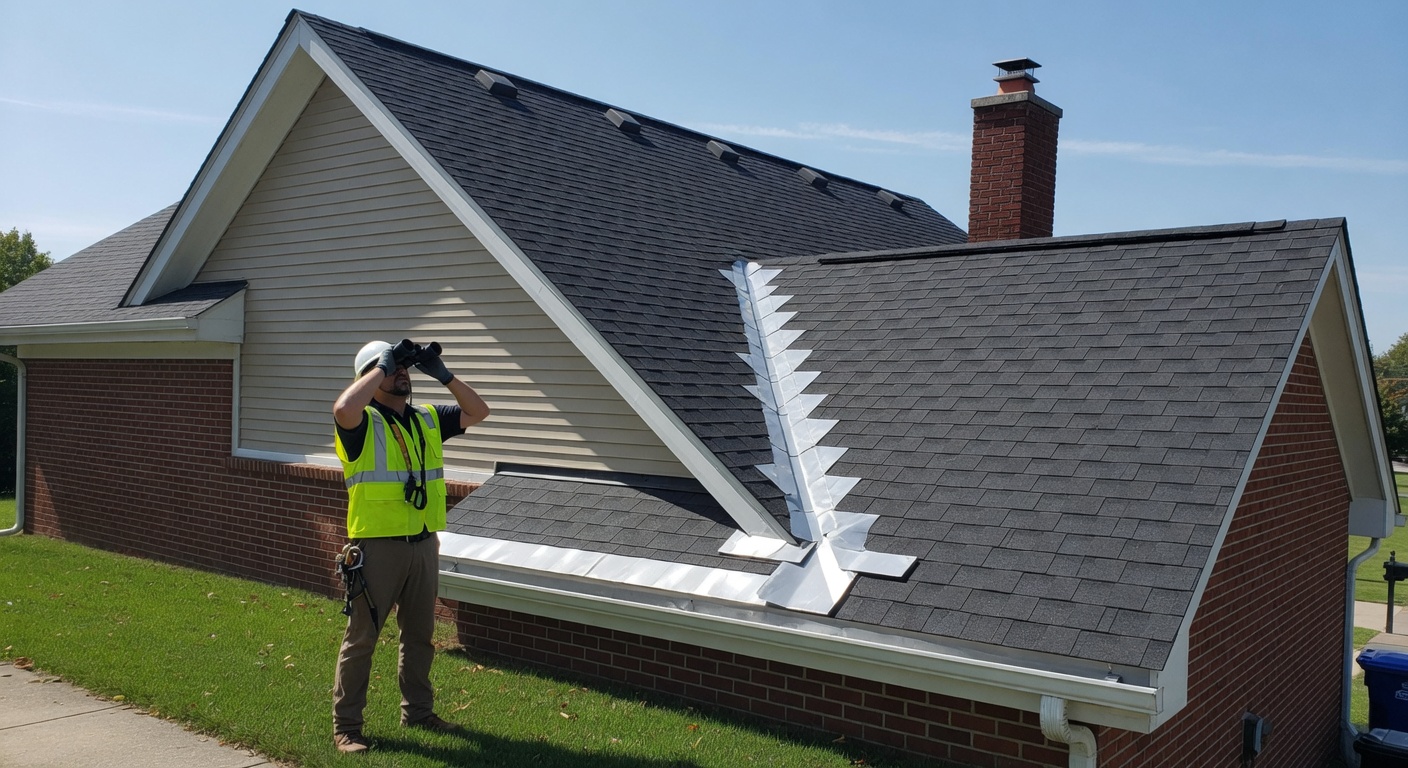
- Visible flashing gaps: Lift or rust around vents, chimneys, or walls can lead to leaks.
If you notice any of these, it's a good idea to document them with photos and schedule an inspection. Do not walk on a steep or aged roof yourself – it's dangerous and can cause more damage.
When a professional inspection adds clarity
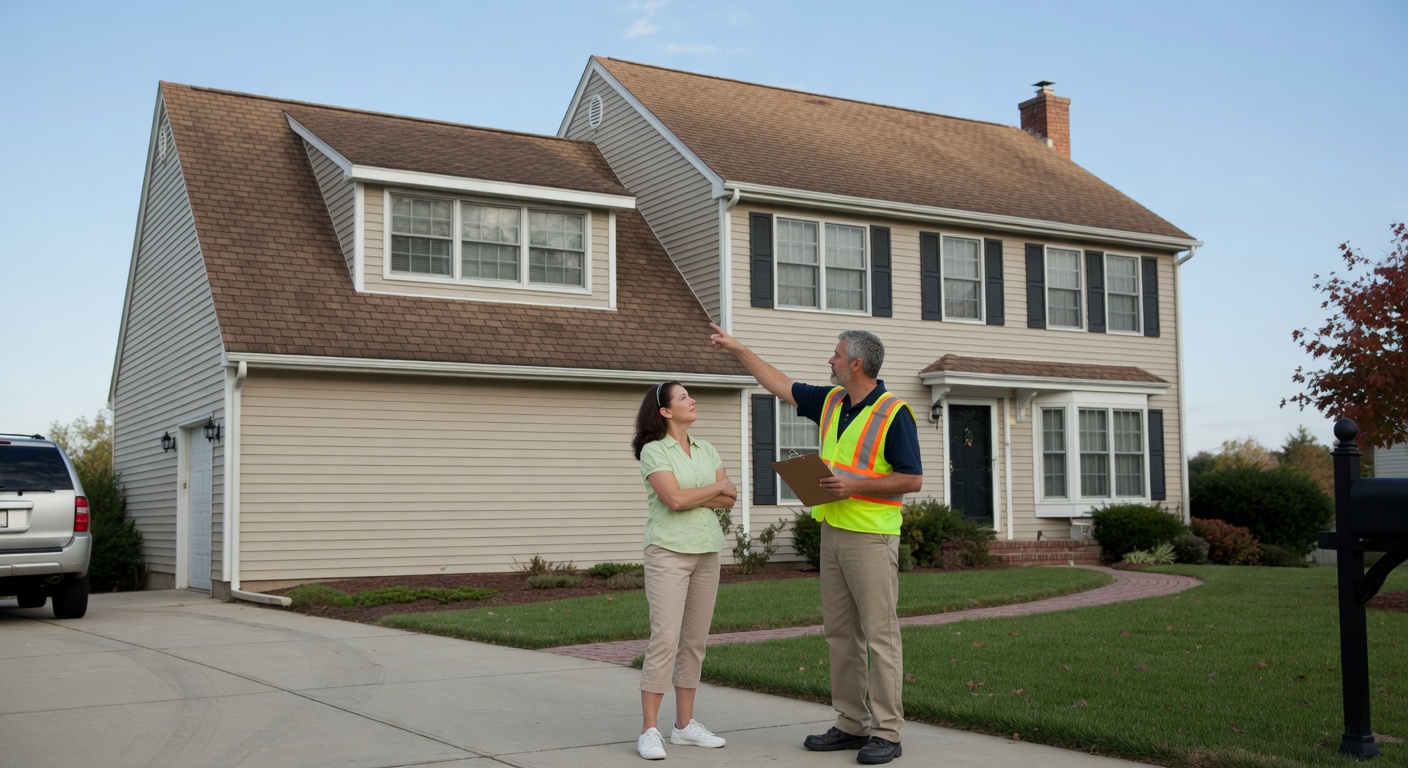
An experienced roofer can distinguish age-related wear from storm damage, check attic ventilation, assess flashing integrity, and provide a practical opinion on whether repair or replacement makes sense. This is especially relevant for Morrisville and Triangle homes from the 2000s that may be reaching their first serious inspection window.
A professional roof inspection in the Triangle includes a thorough evaluation of shingle condition, attic space, flashings, and drainage. The goal is to give you a clear picture of your roof's remaining service life and any immediate needs – without pressure to replace unless it's truly necessary. If the roof can be repaired, we'll explain why. If replacement is the better long-term choice, we'll outline the reasoning and options. For more on that decision, see our guide on roof repair versus replacement.
Final thoughts
The Triangle's hot, humid climate is hard on asphalt shingles, but understanding the factors helps you plan ahead. Regular inspection, proper ventilation, and prompt attention to damage can maximize the life of your roof. And when the time comes for repair or replacement, thoughtful guidance makes all the difference.
If you have questions about your roof's condition or want a clear-eyed assessment, contact us to schedule an inspection. We serve homeowners across Morrisville, Cary, Raleigh, Durham, and the entire Triangle.
More Posts by Morrisville Roofing Company