What black streaks on your roof shingles actually mean
Black streaks running down asphalt shingles are usually algae, not shingle failure. In Morrisville, where hot, humid summers and shaded roof slopes are common, these stains show up regularly on older homes in planned communities and tree-lined neighborhoods. They look bad, especially on lighter-colored roofs, but they rarely mean you need a replacement right away.
The real question is whether streaks are the only problem or a sign of something deeper. If your shingles are intact and there are no leaks, the issue is cosmetic. If the roof is aging, leaking, or shedding granules, the streaks are a nudge to get a professional inspection and see what is actually going on.
Why black streaks form on asphalt shingles
The dark stains come from a cyanobacterium called Gloeocapsa magma. It feeds on the limestone filler in many asphalt shingles and produces a dark pigment that protects itself from ultraviolet light. Rain washes the pigment down the slope, creating the streaks you see from the ground.
This is not dirt, mold, or rot. It is surface growth that sits on top of the mineral granules. In warm, humid climates like Morrisville's, the conditions are almost ideal. Summer mornings stay very humid, and shade from mature trees keeps roof surfaces damp longer. North-facing slopes typically show streaks first because they get the least direct sun and dry out the slowest.
According to the Asphalt Roofing Manufacturers Association, algae discoloration is most common along the Eastern Seaboard and Gulf Coast. Morrisville sits in that zone, so streaking on roofs from the 2000s building boom is routine rather than exceptional.
Algae vs. real roof damage: what changes the answer
Streaks themselves rarely hurt the shingles directly. algae is mainly a cosmetic problem. It does not eat through shingles or create openings for water. The real concern is the condition of the shingles underneath.
Look for these separate issues when you are trying to figure out if the roof actually needs work:
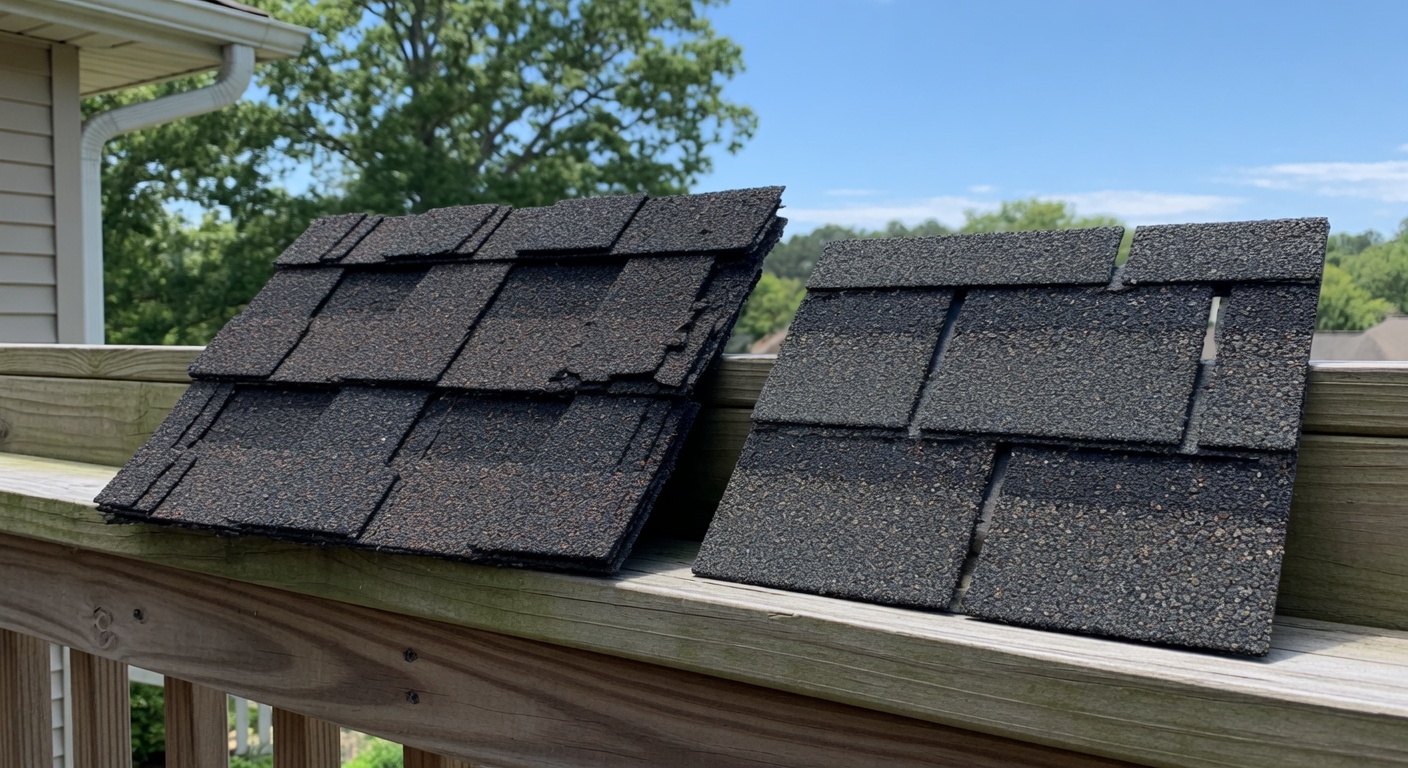
- Curling or clawing tabs — edges turning up or under, which means the shingle is past its service life
- Significant granule loss — bald spots where the asphalt mat shows through, or heavy granules collecting in gutters
- Cracked or missing shingles — usually from wind, thermal cycling, or physical damage
- Active leaks or water stains — on ceilings, in the attic, or at exterior walls after heavy rain
- Sagging decking or soft spots — visible from the ground as irregular planes in the roofline
Streaks plus one or more of those signs point to a roof that may need repair or replacement planning. Streaks alone, on a roof with intact shingles and no leaks, usually mean you have time to weigh your options and plan ahead.
Algae, moss, and lichen: not the same thing
Homeowners often confuse algae with moss or lichen, and the distinction matters. Algae creates flat, dark streaks or uniform darkening. Moss is green, spongy, and grows in raised clumps that can physically lift shingles and trap moisture underneath. Lichen combines algae and fungus into a crusty growth that attaches firmly to the granule surface and can be harder to remove without causing damage.
Moss and lichen are more structurally concerning than algae alone because they hold water against the shingle and can speed up deterioration of the fiberglass mat. If you see green patches or crusty spots instead of simple black streaks, move an inspection up your priority list.
Can algae stains be cleaned, or do they mean replacement
Because algae stays on the surface, it can be cleaned in many cases. The Asphalt Roofing Manufacturers Association recommends a dilute bleach solution applied by professionals who know how to protect your landscaping and siding. High-pressure washing should be avoided. Forcing water under shingles at close range strips protective granules and can create leaks where none existed. That makes renting a pressure washer and climbing up one of the worst ways to handle the problem.
Even after professional cleaning, algae often returns within a few years in humid climates. Some homeowners accept this as routine maintenance, especially when curb appeal matters for resale in Morrisville's competitive housing market. Others use the streaks as a signal to start budgeting for replacement, particularly if the roof is already fifteen to twenty years old.
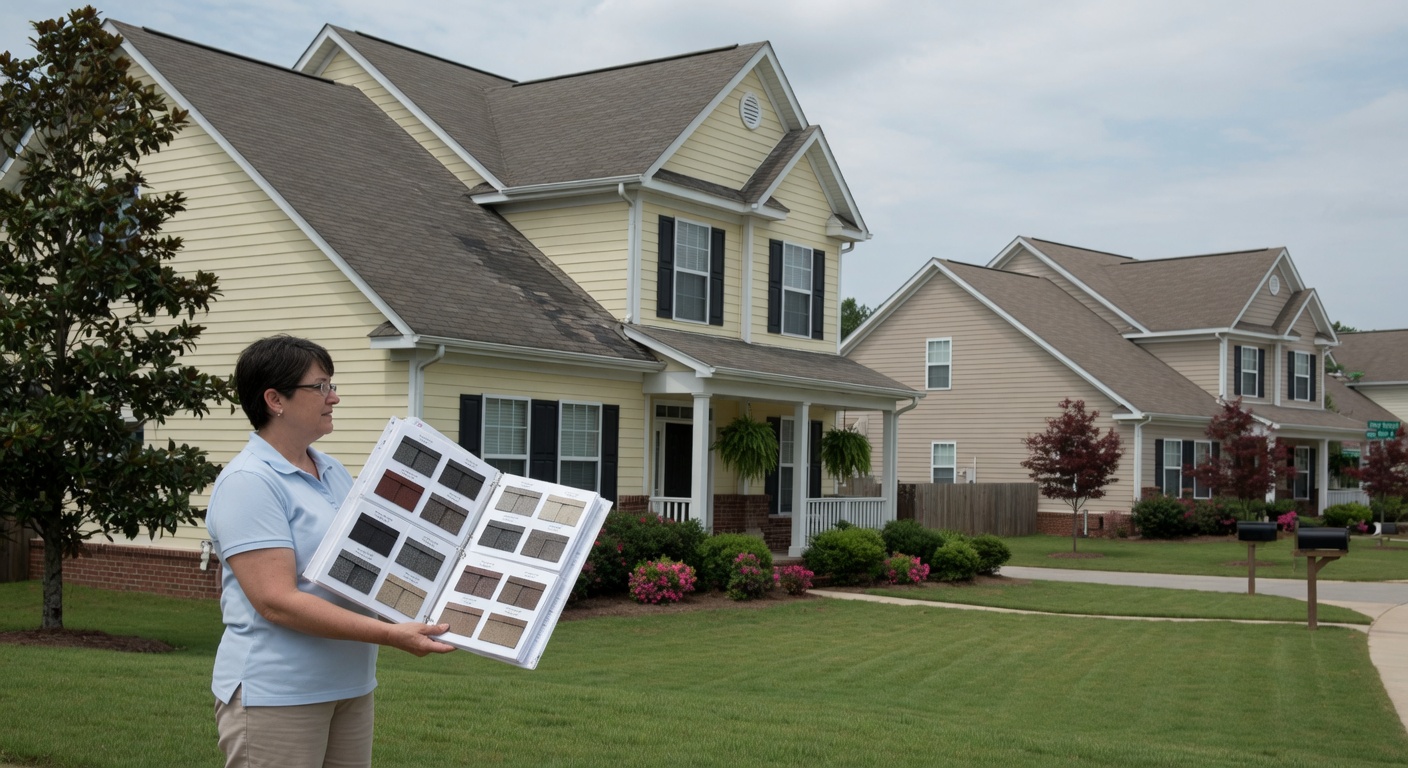
Algae-resistant shingles are available with copper-coated granules that slow Gloeocapsa magma growth. If you are already considering replacement, asking about these products is worth the conversation. We do not promote specific brands, but the technology is widely documented and can reduce streaking over the long haul.
Why Morrisville roofs show streaks earlier than you might expect
Local factors speed up algae growth beyond simple regional humidity. Many Morrisville neighborhoods built during the 2000s now have mature oak and pine canopies shading roofs for large parts of the day. Those trees also drop organic material that holds moisture. Planned communities with townhomes and attached units can create narrow roof channels with limited airflow, keeping surfaces damp longer than wide-open suburban lots.
Homeowners in neighborhoods with architectural review requirements sometimes feel extra pressure because roof appearance affects how the street looks. If you live in a community with an HOA, review your own guidelines before scheduling any cleaning or replacement. Rules vary, and having your roof condition documented helps if the board asks questions.
What you can safely check from the ground
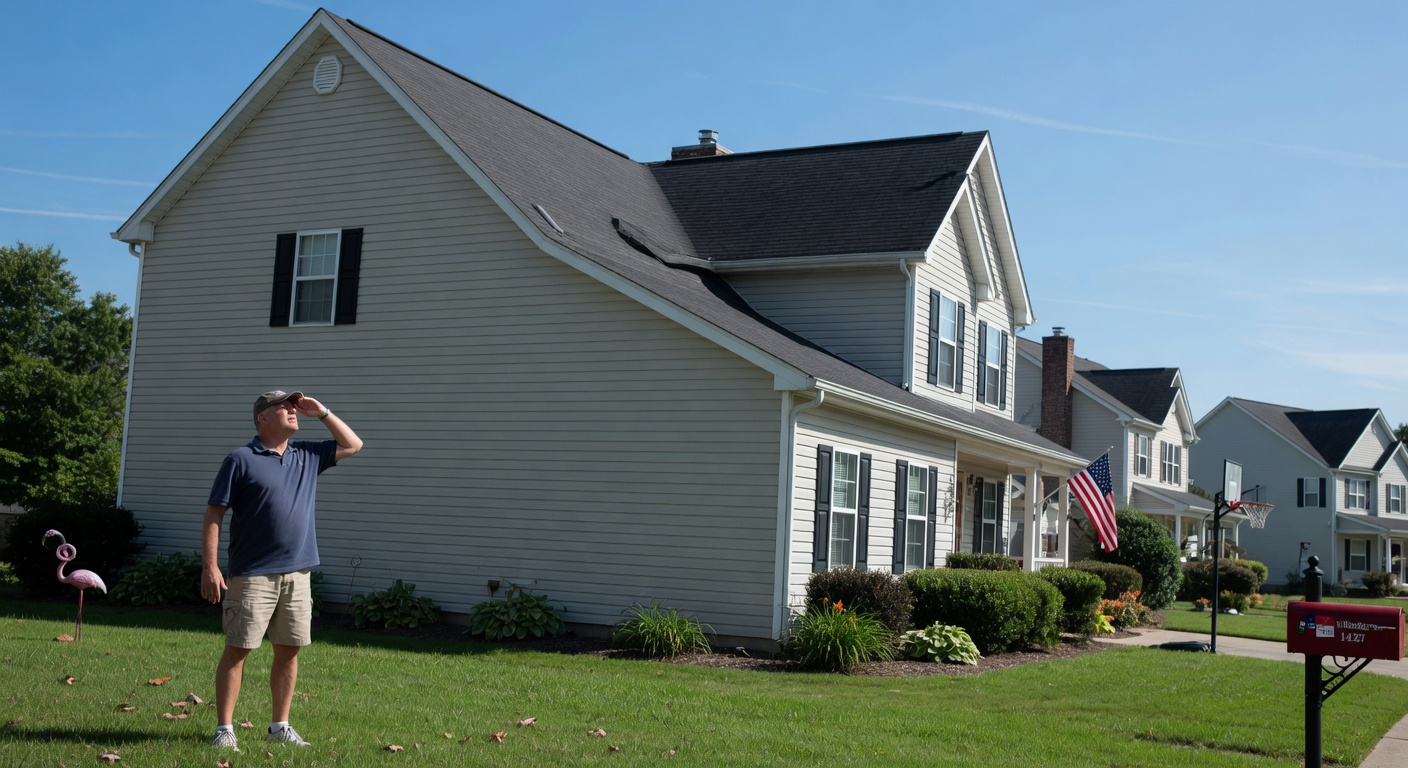
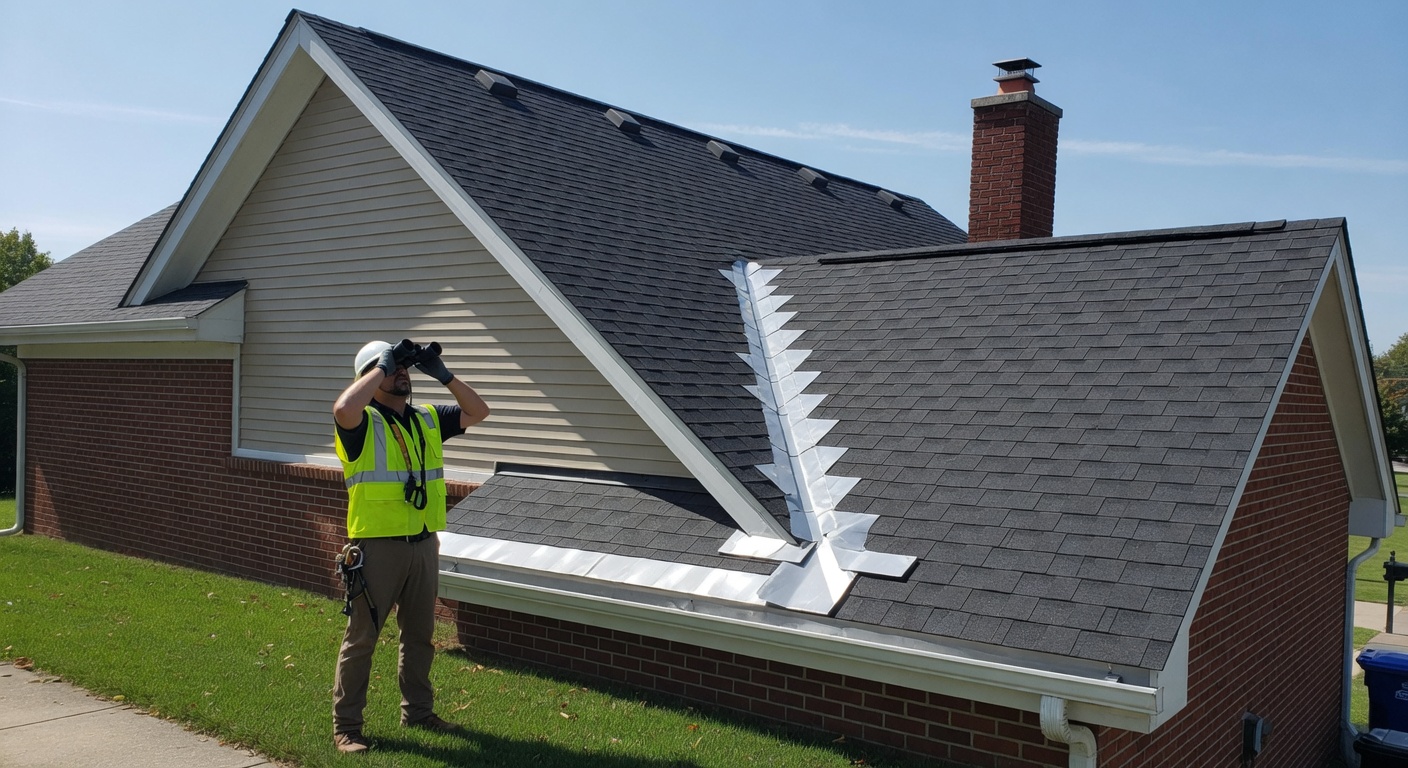
You do not need to walk the roof to assess whether streaks are part of a bigger problem. From the lawn or driveway with binoculars, look for:
- Missing tabs or lifted edges after storms
- Exposed black asphalt where granules have worn away
- Damaged or rusted flashing around chimneys, vents, and wall intersections
- Sagging or dips in the roof plane
- Overflowing or detached gutters that could let water get behind fascia boards
Check your attic for daylight coming through the roof deck, water stains on the underside of the sheathing, or musty insulation after heavy rain. Those findings matter more than surface streaks. For anything beyond ground-level observation, a professional inspection is the safer route.
When to schedule a roof inspection even if streaks look cosmetic
Streaks alone are not an emergency, but there are situations where they should prompt a professional inspection anyway:
- The roof is original to a home built in the 2000s and has never had a full evaluation
- You have had repeated leaks or ceiling stains that do not match obvious shingle damage
- The streaks are accompanied by moss, lichen, or heavy granule accumulation in gutters
- Neighbors with similar roof ages are replacing theirs, suggesting a shared lifecycle point
- You are preparing to list the home and want documented roof condition for buyers
- Recent severe weather brought wind or hail that could have weakened shingles
A good inspection identifies whether the streaks are hiding other wear, checks flashing and penetrations, and gives you a clear picture of remaining service life. That documentation is useful whether you decide to clean, repair, or plan replacement down the road.
How algae fits into broader roof maintenance planning
Rooftop algae is best treated as a maintenance signal, not a crisis. In Morrisville's climate, even well-maintained asphalt roofs can develop streaks within a decade if they lack algae-resistant granules. Keeping gutters clear so water drains properly, trimming overhanging branches for better airflow, and budgeting for occasional professional cleaning are practical steps that extend shingle life without dramatic intervention.
If your roof is entering its third decade, algae may be one of several cosmetic clues that replacement is approaching. In that case, the streaks are not the reason to replace, but they are a useful reminder to get a detailed condition check and start comparing material options before leaks force a rushed decision.
Clear next steps
Black streaks on your Morrisville roof are usually algae, and algae is usually cosmetic. The real question is what else is happening underneath and around those streaks. If your shingles are otherwise intact, your gutters are flowing, and you have no interior water signs, you likely have time to clean or monitor. If your roof is aging, leaking, or showing physical wear, the streaks are a good reason to call in an inspector and get a clear repair-or-replacement assessment.
A roof inspection in Morrisville can separate cosmetic algae from underlying wear and give you documented findings to base a decision on. If you are unsure what you are seeing, you can reach out through our contact page to talk through what your roof actually needs.