Signs of Storm Damage on Your Roof: What You Can Spot from the Ground
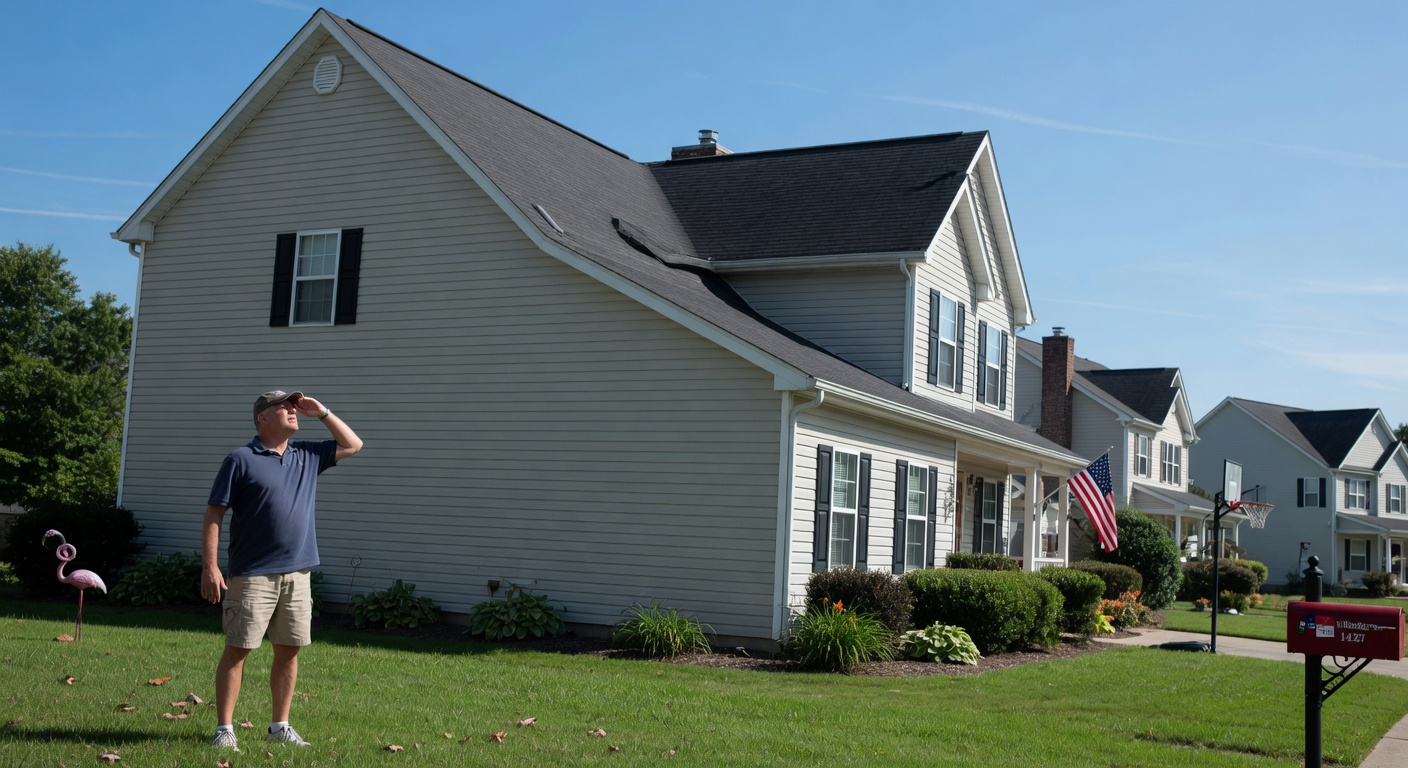
After a thunderstorm rolls through the Triangle, it's natural to wonder if your roof took a hit. The good news is you can safely check for signs of storm damage from the ground without climbing onto the roof. This guide walks through visible indicators of wind and hail damage, when they matter, and when to call a professional for a thorough inspection.
Quick answer: Look for missing, curled, or creased shingles; granules in gutters; dark circular bruises or dents on shingles; and damage to metal gutters, vents, or flashing. These signs suggest possible storm impact but don't confirm full damage — a professional inspection is needed to assess the extent.
What storms commonly affect Triangle roofs
The Triangle region—including Morrisville, Cary, Raleigh, Durham, and surrounding areas—sees regular severe thunderstorms. According to the National Weather Service in Raleigh, severe criteria include wind gusts of at least 58 mph and hail of at least 1 inch in diameter. Both can damage asphalt shingles, flashing, vents, and gutters. Newer planned-community homes and older subdivisions alike are exposed to these storms, especially during spring and summer.
Understanding these local risks helps you know when a ground check makes sense after a storm passes.
Signs of wind damage you can see from the ground
High winds can lift, crease, or tear shingles. From the ground, look for these indicators:
- Missing shingles — bare spots on the roof where shingles have blown off
- Curled or lifted edges — shingle tabs that appear raised or peeling up
- Creased shingles — a dark line across the shingle where it folded under wind pressure
- Granules in gutters or downspouts — excessive grit collecting after a storm may signal shingle surface wear
- Shingle debris in the yard — pieces of asphalt or torn shingles near the house
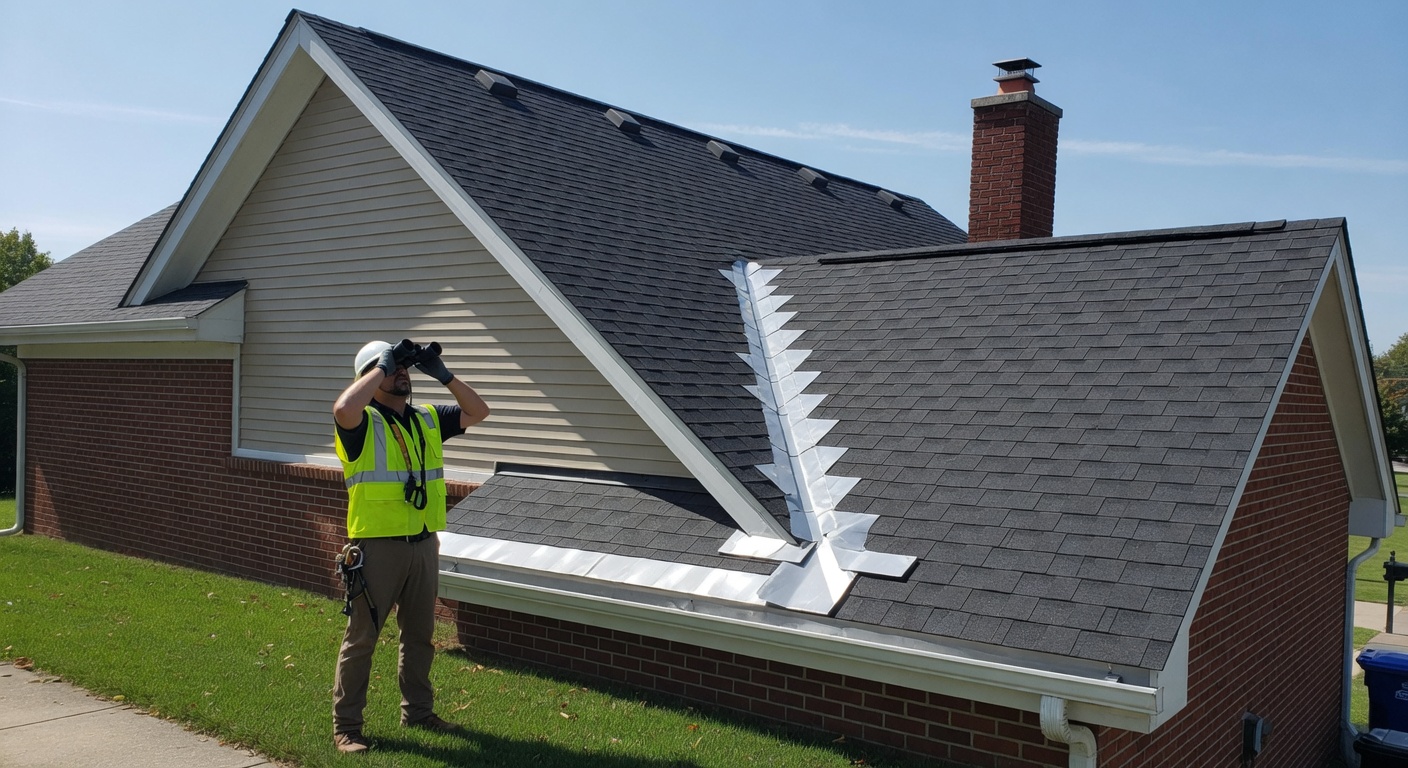
These signs are easiest to spot with binoculars from the ground. Focus on roof edges, ridges, and areas around vents or chimneys where wind turbulence is strongest.
Signs of hail damage you can see from the ground
Hail impacts can bruise asphalt shingles and damage metal components. Visible signs include:
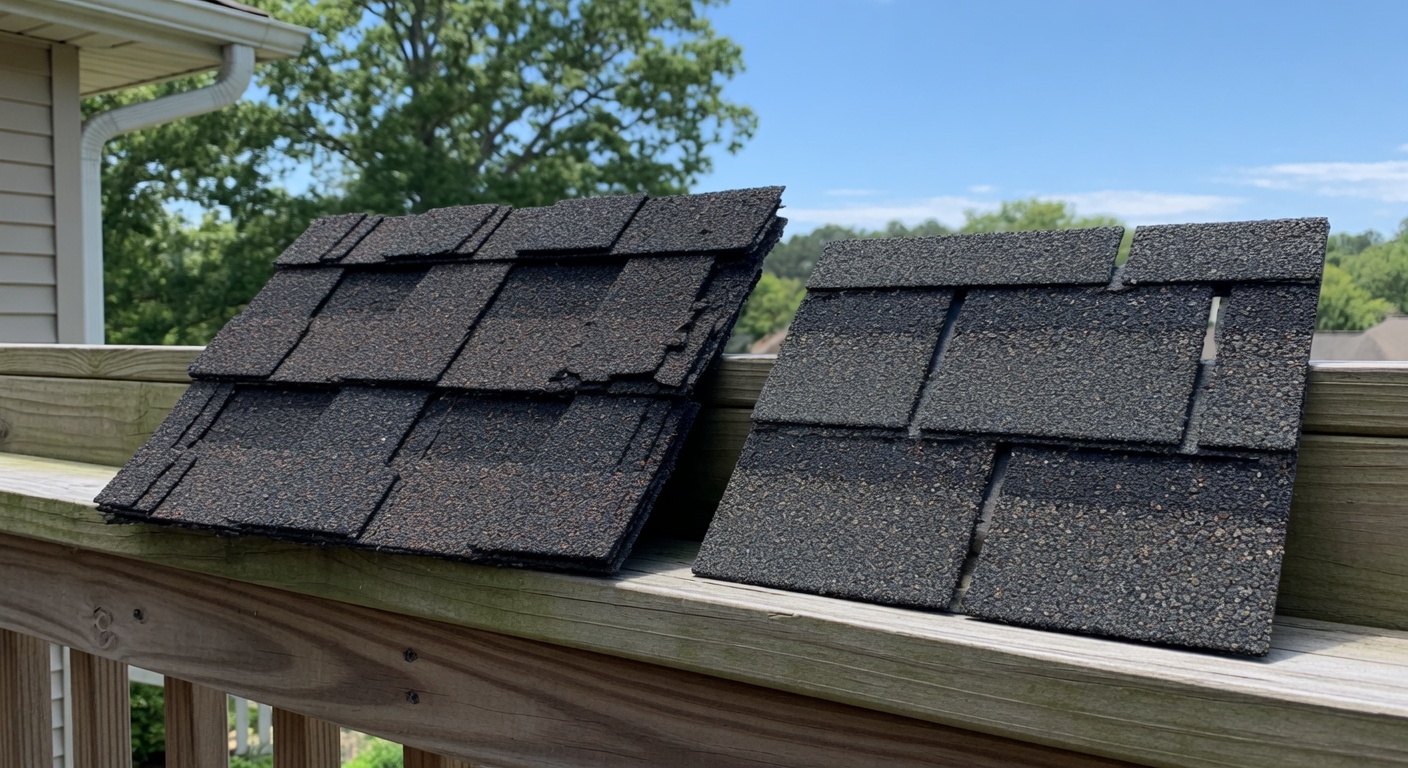
- Dark circular bruises — softball-sized dark spots on shingles where hail struck, often with a dimpled texture
- Granule displacement — bald or shiny patches where granules have been knocked off, exposing the asphalt layer
- Cracked or split shingles — hail can cause fissures, especially in older shingles
- Dents on metal gutters, vents, or flashing — rounded indentations are a strong sign of hail impact
- Granules accumulating in gutters — similar to wind but often more localized to impact areas
Note that hail bruises may not always be obvious from the ground if the roof has a dark color or heavy granule loss from age. An inspector can get a closer look safely.
When visible changes suggest professional inspection
Some signs are more concerning than others. Consider a professional inspection if you notice:
- Multiple missing shingles or widespread creasing
- Granules clogging several downspouts or gutters
- Dark bruises or dents across multiple roof slopes
- Damage to metal flashing, vents, or skylights
- Any sign combined with a known severe storm (58+ mph winds or 1+ inch hail in your area)
Even one or two isolated signs can be worth checking. A professional roofer can document findings, differentiate storm damage from normal wear, and recommend repairs or replacement only when needed.
Remember: some damage starts small. A lifted shingle may leak months later, and hidden granule loss reduces future shingle life. A professional roof inspection catches issues early.
Factors that change the next step for Triangle homeowners
Roof age and condition
For example, newer shingles (less than 10 years old) may withstand a storm better and need only isolated repairs. Older roofs near the end of their service life may have multiple weak points that make replacement more practical if damaged.
Repair vs. replacement
Not every visible sign means full replacement. A few missing shingles can often be repaired if the surrounding roof is sound. But if damage is widespread or the roof already has other issues like algae staining, curling, or excessive granule loss, replacement might be the better long-term choice.
Insurance and documentation
If you plan to file an insurance claim, you'll need clear documentation. A professional inspection can provide photos and written notes that support your claim. Keep in mind that coverage depends on your policy and the cause of damage — visible signs alone don't guarantee a payout.
HOA and neighborhood guidelines
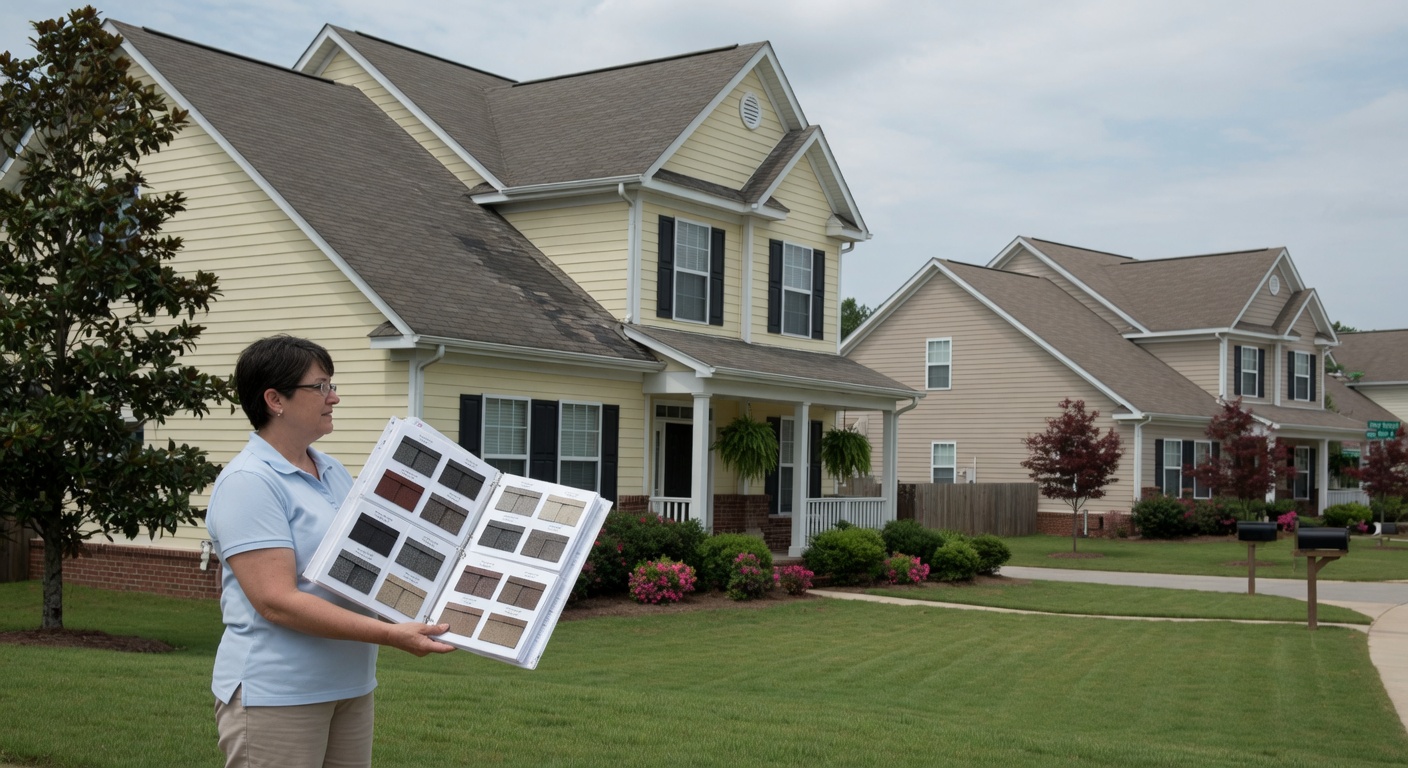
In many Triangle planned communities, roof material and color choices are governed by neighborhood rules. If repairs or replacement are needed, check your HOA's requirements before proceeding. Your roofer can provide product specs and documentation for approval.
Next steps: get a professional inspection
Ground checks are a helpful first step, but they can't reveal everything. A professional roofer has the training and equipment to safely assess the full extent of storm damage — including lifted shingles, flashing integrity, and attic signs of leakage.
If you've spotted any of the signs above, or if you simply want peace of mind after a severe storm, we can help. Contact Morrisville Roofing Company to schedule a thorough roof inspection. We'll document what we find, explain your options clearly, and recommend only what's necessary — no pressure, just practical roofing guidance for Triangle homeowners.
Request a roof inspection today.
More Posts by Morrisville Roofing Company